

close
Choose Your Site
Global
Social Media
Views: 0 Author: Site Editor Publish Time: 2026-04-24 Origin: Site


Transitioning from outsourced finishing or manual batching to an in-house facility represents a major operational leap. Designing and building an industrial powder coating line requires significant capital expenditure (CapEx). Many organizations struggle during this transition phase. Over-engineering leads to inflated total cost of ownership and unused capacity. Under-engineering creates severe throughput bottlenecks and high rejection rates. You need a structured approach to avoid these costly extremes. We will walk you through designing a balanced thermodynamic and mechanical system. You will learn to calculate line speed, evaluate oven fuels, and specify pretreatment stages. This guide provides plant managers and engineering teams a clear, vendor-neutral framework for specifying, evaluating, and commissioning a highly efficient powder coating line.
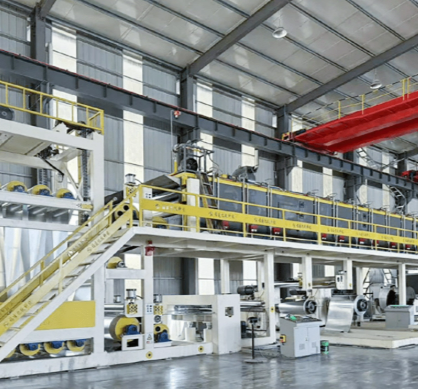
Designing an industrial powder coating line starts with calculating throughput using "reference part hangers" rather than raw piece counts.
Fully automated continuous systems typically require 3x to 12x the initial investment of batch systems but yield significantly lower per-unit labor costs.
Energy consumption (curing and wash heating) will account for 10% to 15% of your total operational costs, making oven fuel choice a critical ROI driver.
A comprehensive Technical Assignment (RFP) is non-negotiable to align facility constraints, compliance standards, and production goals before vendor selection.
Every successful facility begins with strict data collection. You must establish an engineering baseline before contacting any equipment vendors. This baseline prevents scope creep and ensures your system handles peak production demands.
You must first identify your maximum physical part envelope. Measure your longest, widest, and tallest parts. Weigh your heaviest assemblies. These extreme dimensions dictate your system's structural limits. They determine the oven opening dimensions, booth clearances, and turning radii. Weight profiling directly influences load-bar capacity. Standard overhead conveyors handle typical parts easily. However, heavy steel castings may require high-capacity 2,000 lb limits per load bar. Upgrading conveyor capacity later is extremely expensive.
Avoid relying on raw piece counts. Instead, group your parts into broad size categories. Calculate your required conveyor speeds using the "reference part hangers" formula. This method provides a realistic view of production.
Step 1: Determine your total monthly quota for a specific part category.
Step 2: Divide this quota by your available operating hours.
Step 3: Calculate how many parts fit on one hanger safely.
Step 4: Divide the hourly part requirement by parts per hanger to find your required hangers per hour.
If you need 3,200 parts per month and operate 160 hours, you need 20 parts per hour. If four parts fit on one hanger, your line must process 5 hangers per hour. This math drives your conveyor speed calculations directly.
Map your available floor space accurately. Use DWG layouts to mark load-bearing column placements. Account for raw material staging zones and finished goods packing areas. Ceiling clearance is incredibly important. Taller ovens require more vertical space, especially when adding heat exhaust stacks. You also need space for safe worker movement and maintenance access doors.
Define your required coating layers clearly. Will you run a single topcoat, or do you need a zinc-rich primer plus a topcoat? Specify your corrosion resistance metrics in salt-spray hours. Ensure you meet required certifications. Automotive or architectural applications often demand strict ASTM or QUALICOAT compliance. These standards dictate how aggressive your chemical wash stages must be.
Selecting the right architectural framework is your next major decision. We generally classify these systems into three categories. Each setup solves specific operational challenges.
Batch systems rely on manual transfer between unconnected stations. Operators move racks manually from a wash bay to a spray booth, then into a static oven.
Best for: High-mix, low-volume production schedules. They excel when processing excessively large or heavy single-run parts. They also fit well inside facilities lacking the floor space for long conveyors.
Trade-offs: You benefit from a much lower initial CapEx. However, batch operations create a high dependency on manual labor. Throughput remains inherently slower and susceptible to human error.
These systems link all stages via a continuous moving chain. Parts travel seamlessly through the washer, dry-off oven, spray booth, and cure oven.
Best for: Consistent product geometries and high-volume throughput. They provide strict quality repeatability because the line speed dictates exact dwell times.
Trade-offs: Continuous lines demand precise line-speed calculations. If one part requires a longer bake, the entire line slows down. Procurement and installation costs generally run 3x to 12x higher than manual batch setups.
Smart systems utilize recipe-based controls. Load bars operate independently on motorized friction-drive tracks rather than a single continuous chain.
These systems allow dissimilar products to run back-to-back without halting the entire line. The system adjusts dwell times dynamically per part. A heavy casting can linger in the oven while a light aluminum extrusion speeds ahead. This flexibility bridges the gap between batch customization and continuous automation.
Configuration Comparison Chart
System Type | Initial Investment (CapEx) | Labor Dependency | Production Mix Fit | Throughput Speed |
|---|---|---|---|---|
Batch Processing | Low (Baseline) | Very High | High-mix, Custom parts | Slow |
Automated Continuous | High (3x to 12x Baseline) | Low | Low-mix, High-volume | Very Fast |
Smart Hybrid | Very High | Low | High-mix, High-volume | Variable / Dynamic |
A complete finishing system is a collection of integrated technologies. You must engineer each section to balance mechanical force, chemical reactions, and thermodynamic efficiency.
The Reality: Coating adhesion always fails without proper surface prep. You can buy the most expensive spray guns, but poor cleaning guarantees peeling paint.
Mechanical Prep: Consider inline automated blasting systems. Manual sandblasting often creates massive bottlenecks. An automated blast cabinet can reduce 30-minute manual blast times down to just 1 minute for continuous lines.
Chemical Wash Stages: Evaluate 3-stage to 9-stage washer setups carefully. Your substrate dictates the chemistry. A standard 3-stage iron phosphate wash works for indoor steel components. However, demanding outdoor applications require more. Modern systems increasingly use zirconium conversion coatings versus traditional iron phosphates. Zirconium operates at lower temperatures and produces significantly less toxic sludge. Always factor in alkaline cleaning and halo rinses. Halo rinses prevent flash rust. Using Reverse Osmosis (RO) water in your final rinse prevents hard water spotting under the paint.
Single Color vs. High-Mix: Standard hopper-fed systems work perfectly for single colors. You fill the hopper, and it fluidizes the powder constantly. However, changing colors in a hopper takes time. If you require 3 or more daily color changes, invest in box-fed quick-color-change booths. These booths draw powder directly from the manufacturer's box. They use self-cleaning cartridge filtration and smooth-wall designs to allow color changes in minutes.
Gun Configurations: Evaluate manual touch-up stations versus programmed auto-gun arrays. Oscillating auto-guns cover large flat surfaces perfectly. However, complex geometries with deep recesses experience "Faraday cage" effects. Powder struggles to penetrate these corners. You often need a manual operator positioned downstream to touch up these difficult areas.
Energy Source: Choose carefully between natural gas, electricity, or combustible fuels. Energy costs dictate your long-term TCO. Natural gas remains the most cost-effective option in most industrial regions.
Oven Types: Decide between Infrared (IR) and Convection ovens. IR energy provides rapid line-of-sight gel times. It melts the powder quickly but cannot cure shadowed areas. Convection ovens circulate hot air to heat complex geometries evenly. Many modern lines use a hybrid approach. An IR booster gels the powder instantly to prevent contamination, followed by a convection soak.
Operational Baselines: Standard powder curing requires sustained part-metal temperatures of 350°F to 450°F. The most frequent target is 400°F for roughly 20 minutes. Insulation thickness and air seal design are critical here. Poorly insulated walls or unsealed entry doors cause massive heat loss, driving your gas bills through the roof.
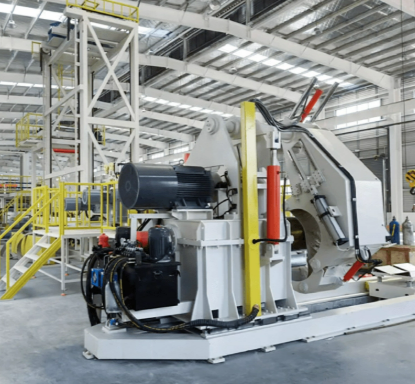
You cannot evaluate equipment based purely on the initial sticker price. You must calculate the total cost of ownership over a ten-year lifespan.
Direct Operational Drivers: Energy usage represents a massive expense. It typically accounts for 10% to 15% of your per-square-meter coating cost. Raw powder utilization is another driver. Reclaim systems can push powder transfer efficiency from 60% up to 95%. Automated chemical dosing efficiency prevents wasted pretreatment chemicals.
Labor & Rework Reductions: Automation significantly cuts manual transfer labor. Standardized, recipe-driven spraying reduces mil-thickness variance. Consistent coating thickness limits costly rework and warranty claims.
Hidden Costs to Model: Factor in daily maintenance hours. Operators must clean nozzles and purge lines to avoid cross-contamination. Model your consumable replacements, including wash nozzles, gun wear parts, and booth filters. Finally, budget for scheduled environmental compliance testing and wastewater disposal.
Never approach a vendor asking for a generic quote. You must guide them using a structured document.
Translate Data to Vendor Requirements: Consolidate your throughput math, DWG facility layouts, and energy availability. Package this into a standardized Technical Assignment (TA) or Request for Proposal (RFP). Include your reference part hangers and maximum part dimensions.
Specify Your Substrate: Assess the integrator's experience with your specific material. Processing aluminum extrusions requires vastly different wash chemistry than heavy steel castings.
Demand Written Guarantees: Require guaranteed line-speed calculations in their proposal. Demand projected energy consumption estimates in writing. Hold them accountable to these thermodynamic models.
Evaluate System Modularity: Can the line be expanded later? Ask if you can add a wash stage or lengthen the oven without tearing down the existing infrastructure. Modular designs save millions during future expansions.
Next Action: Shortlist 2 to 3 specialized finishing systems integrators for initial facility audits. Avoid generic general contractors. You need engineers who understand complex airflow dynamics and surface chemistry.
Making a powder coating line is less about buying discrete pieces of equipment and more about engineering a balanced thermodynamic and mechanical system. A poorly matched washer and oven will cripple your throughput, regardless of how advanced your spray guns are.
Prioritize building a data-driven Technical Assignment over immediate price shopping. Define your largest parts, calculate your required conveyor speeds, and mandate specific thermal efficiencies. Focus on long-term scalability and total cost of ownership. Select an integration partner with proven, industry-specific expertise who is willing to guarantee their performance metrics in writing.
A: Required space depends entirely on your line speed and required dwell times. If you need 20 minutes at 400°F and your conveyor moves at 3 feet per minute, your oven alone must contain 60 feet of track. You also must calculate space for multi-stage washers, spray booths, and extensive cooling zones. Automated continuous systems easily span 3,000 to 10,000 square feet.
A: It depends on your system type. In manual batch lines, operator labor consumes the vast majority of the budget. In automated continuous lines, thermal energy dominates. Heating multi-stage chemical wash tanks and firing massive gas cure ovens accounts for 10% to 15% of total coating costs.
A: Upgrading is highly difficult and rarely cost-effective. Batch ovens and spray booths do not translate perfectly to continuous conveyors due to differing airflow patterns and continuous opening requirements. You usually cannot retrofit a chain through a batch oven efficiently. Modularity and continuous flow must be planned from day one.


