

close
Choose Your Site
Global
Social Media
Views: 0 Author: Site Editor Publish Time: 2026-08-17 Origin: Site


Choosing between a fully automatic and a semi-automatic electrophoretic coating line is not a choice between modern and outdated equipment. It is a decision about how consistently parts flow, how much product mix changes, how operators intervene, and where a production team needs flexibility. Both concepts can include tanks, pretreatment, electrodeposition, ultrafiltration rinsing, curing, and conveyors. The difference is the degree to which loading, transfer, timing, monitoring, and unloading are coordinated automatically. The best fit follows the real production pattern, not a general assumption that more automation always produces a better business case.
Fully automatic lines are often suited to repeatable, high-volume work where fixed routing and controlled timing support consistent results.
Semi-automatic lines can suit variable loads, medium volumes, staged investment, and operations that benefit from planned manual handling.
Automation should be assessed across part loading, transfer, bath control, inspection, material handling, maintenance, and traceability—not only by whether a PLC is installed.
The required coating quality comes from validated process control; automation helps repeat it, but cannot correct unsuitable part preparation or an unbalanced line layout.
The first question is how the factory actually runs. A product family with similar hanging geometry, stable demand, predictable shifts, and continuous downstream assembly is a strong candidate for extensive automation. A business that processes many sizes, low-volume orders, prototype batches, or frequently changing fixtures may need an operating model that lets people make controlled adjustments without stopping an entire linked system.
List the expected part mix, maximum and minimum lot sizes, daily shift pattern, target takt time, part weights, allowable work-in-process, and the point where inspection decisions occur. Include expected future products rather than only the launch item. A line that is optimized for one large bracket may become restrictive when the next order has long frames, deep enclosures, or parts that need different rack spacing.
The coating process itself also imposes timing. Pretreatment dwell, bath immersion, rinsing, drip time, and cure duration should be set by the selected chemical system and validated on the part. A faster conveyor cannot shorten every stage proportionally. A production design should identify the bottleneck and decide whether buffer zones, parallel workstations, or a different loading strategy are necessary.
A fully automatic line commonly uses programmed transfer and conveyor movement to carry standard loads through defined stages. Depending on the system scope, it may coordinate loading assistance, pretreatment, tank transfer, power control, rinse sequencing, oven travel, unloading, alarms, and process data. Operators still matter: they prepare fixtures, manage material supply, verify parts, respond to exceptions, perform maintenance, and review quality data. Automation changes the tasks; it does not remove accountability.
Its main benefit is repeatability. A programmed route can apply the same immersion time, transfer pace, and treatment sequence to each valid load. Central control can make it easier to record operating conditions and recognize deviations. This is useful when a variation in dwell time, rack position, or conveyor speed would otherwise cause a visible coating difference.
The trade-off is that every connected element becomes more important. An unavailable sensor, drive, transfer unit, or interlock can stop more of the process than a local manual task would. Changeover also requires discipline. New racks, altered part dimensions, different cure requirements, and revised quality checks must be evaluated in the control logic and physically validated—not simply added to a production schedule.
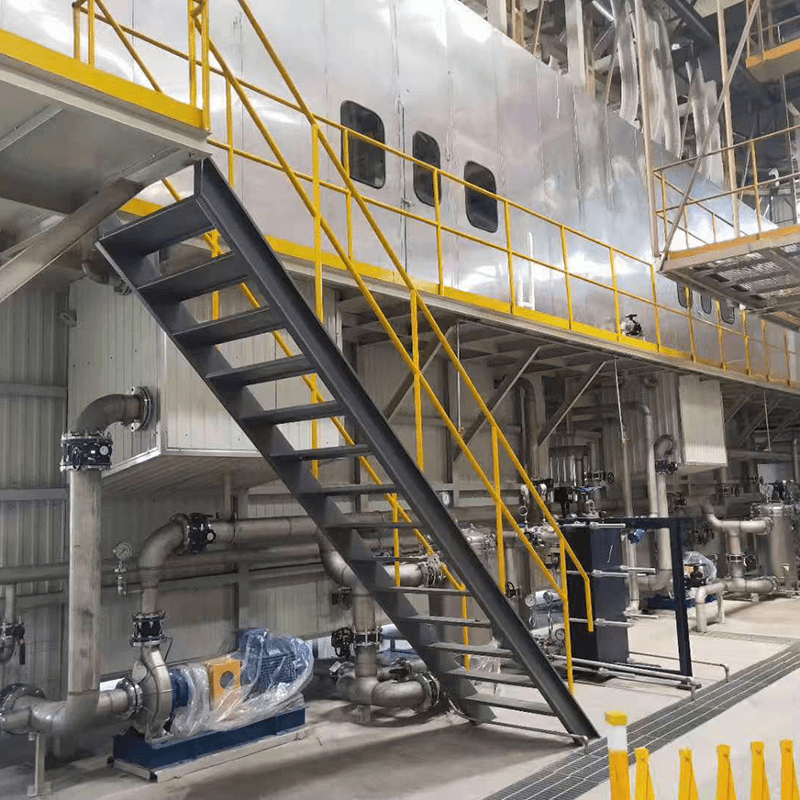
A semi-automatic configuration retains automatic control for selected critical stages while using planned manual activity for loading, transfers, inspection, or unloading. It can make sense for medium-volume programs, diverse parts, and facilities that need to expand capacity in stages. Manual involvement can allow workers to adjust fixtures, assess unusual part geometry, and manage small lots without forcing every task into a fixed cycle.
This flexibility must not become improvised processing. The operating method should still define rack type, loading pattern, grounding checks, dwell time, transfer sequence, rinse observation, and inspection criteria. If an operator chooses a different hang angle for every batch, the resulting variation can be more damaging than the labor saving the semi-automatic design was meant to achieve.
A well-designed semi-automatic line also makes labor visible. Estimate who will load, unload, inspect, handle rework, replenish consumables, and perform routine checks in each shift. Do not compare equipment costs only; compare the complete operating workflow, including training and safe access around tanks, conveyors, and curing equipment.
Decision factor | Fully automatic configuration | Semi-automatic configuration |
|---|---|---|
Best production pattern | Repeatable high-volume or continuous flow | Variable mix, medium volume, or phased growth |
Transfer and timing | Programmed and highly repeatable | Partly programmed, with defined manual actions |
Changeover | Requires engineering discipline and system validation | Often more adaptable, but still needs standardized work |
Labor profile | Fewer repetitive transfer tasks; greater need for monitoring and maintenance skills | More handling and inspection labor; useful for flexible batching |
Upfront scope | Higher integration, controls, guarding, and commissioning complexity | Potentially lower initial scope, depending on process stages retained |
Downtime effect | A central fault can affect a larger connected section | Some local tasks may be recoverable, though manual variation must be controlled |
The table is a decision aid, not a capacity calculation. A fully automatic line can be undersized if tank residence time or curing capacity is the bottleneck. A semi-automatic line can be highly productive when rack handling and scheduling are well designed. Throughput should be calculated from the slowest validated process stage and the allowable number of loads in that stage, then checked against loading, unloading, and maintenance windows.
An automatic e-coat line benefits from good data, but data should serve a decision. Useful records include conveyor status, dwell-time exceptions, rectifier output trend, bath-temperature trend, rinse conditions, oven temperature verification, alarm history, and inspection results tied to the load. Collecting hundreds of signals without a response plan does not improve coating quality.
The layout must make the data actionable. Operators need safe access to contacts, nozzles, filters, sampling points, and panels. Maintenance staff need room to inspect conveyor drives and service equipment without bypassing safeguards. Quality teams need a defined place to inspect parts after cure, including difficult features that may not be visible on a moving conveyor. A line designed only around straight material flow can create hidden maintenance and inspection bottlenecks.
BONITA MACHINERY describes fully automated, semi-automated, and manual options for its automotive electrophoresis line. That makes the early specification stage especially important: identify which decisions the controls system should make automatically and which judgments should remain with trained operators.
One mistake is equating labor reduction with total cost reduction. Automation can lower repetitive handling, but it adds control architecture, spares planning, programming, and diagnostic skills. The financial comparison should include expected utilization, downtime exposure, utilities, quality loss, rework handling, and planned maintenance, not only the purchase price.
Another mistake is treating all “semi-automatic” offers as comparable. One line may automate pretreatment and conveyance but use manual loading; another may require manual movement between major tanks. Ask for a process map showing every handoff, the responsible role, timing tolerance, and what prevents a load from being skipped or processed twice.
Finally, avoid buying for a forecast without a fallback. If volume will grow gradually, determine whether the line can add carriers, racks, controls, curing capacity, or buffer space later. Expansion is easiest when the utility routes, layout, and control architecture leave planned interfaces rather than requiring a major rebuild.
Before requesting a proposal, document the parts, load weights, output target, operating shifts, quality requirements, future mix, available floor area, utilities, site handling method, and desired level of traceability. Identify where manual decisions are acceptable and where repeatable automatic timing is essential. Ask for the basis of the proposed throughput and the assumed dwell times at each process stage. Review access for maintenance and cleaning before approving the layout.
BONITA MACHINERY is a manufacturer and supplier of coating-production-line systems, with product information that includes modular configurations and conveyor options. The decision between automatic and semi-automatic equipment should still be based on a reviewed process map and representative production trial, rather than an automation label alone.
Every line needs a plan for the load that cannot follow the normal route. A rack may arrive with a missing part, an inspection may identify a questionable weld, or a control alarm may interrupt a transfer. In a fully automatic system, the control logic and operator instructions should establish whether the load is held, diverted, reworked, or scrapped, and who can authorize a restart. In a semi-automatic system, the same decisions should be expressed in standardized work rather than left to personal judgment.
This exception plan protects throughput as well as quality. Without it, an operator may bypass a check to keep the line moving, or a valuable batch may be held longer than necessary because no one knows the next step. Review how a failed grounding contact, bath alarm, conveyor interruption, or oven deviation will be recorded and isolated. The most useful automation level makes normal production repeatable and abnormal production visible, while leaving trained people enough information and authority to respond safely.
During supplier discussions, include an exception scenario in the acceptance plan. Confirm how alarms are acknowledged, what information remains associated with a held load, and how the team prevents accidental re-entry without review. These details do not make a line slower; they make quality decisions repeatable when production is under pressure.
Consider who will perform this work on every shift. The line configuration should support safe access to the held-load area, clear instructions on the control interface, and a simple way to communicate the status to quality and maintenance. Automation is strongest when it reduces ambiguity instead of hiding it inside a complex sequence.
A fully automatic Electrophoretic Coating Line is usually most persuasive when stable, high-volume work rewards repeatable timing and connected material flow. A semi-automatic design can be the better production tool when variability, staged growth, or controlled manual handling creates more value than rigid routing. The right answer comes from the process bottleneck, part mix, staffing model, and maintenance capability. BONITA MACHINERY can support configurable line concepts; a complete specification should make each automated and human task explicit before equipment is selected.
Not necessarily. It improves repeatability and continuous flow when the work is stable, but throughput is still limited by validated treatment, rinse, and cure times as well as load handling.
Yes, when critical process settings and manual actions are standardized. Racking, grounding, load spacing, timing, and inspection must be controlled rather than left to informal practice.
Prioritize steps where timing, safety, transfer repeatability, or traceability have the greatest effect on quality. The answer differs by part mix and existing factory workflow.
No. Operators and maintenance personnel remain responsible for fixtures, material flow, inspection, consumables, alarm response, preventive maintenance, and process verification.
Reserve space and interfaces for likely expansions, and verify whether tanks, conveyors, ovens, controls, and utilities can be enlarged without creating a new bottleneck.


