

close
Choose Your Site
Global
Social Media
Views: 0 Author: Site Editor Publish Time: 2026-08-03 Origin: Site


Overspray silently drains profitability across industrial finishing facilities worldwide. You watch expensive coating materials float into exhaust filters instead of adhering directly to your products. This compounding waste drives up daily maintenance costs. It inflates labor overhead and increases strict regulatory compliance risks.
Traditional manual spraying often yields unpredictable transfer efficiency. Human variables make consistent application nearly impossible. Modern automated systems solve this problem entirely. They transition the coating process from a highly variable art form into a controlled, data-driven operation. By automating fluid delivery, regulating atomization, and balancing airflow, you lock in highly consistent results.
Evaluating and upgrading your current setup directly correlates to measurable expense reductions. In this comprehensive guide, you will learn how precision application technology minimizes wasted material. We will also explore how optimizing your application environment secures long-term compliance and protects your operational bottom line.
Transfer Efficiency (TE) is the Core Metric: Upgrading a painting line can improve TE from 30-40% (manual) to over 80% (automated electrostatic), drastically cutting raw material waste.
Hidden Costs Eclipse Paint Waste: Automated systems reduce secondary expenses, including filter replacement frequency, booth cleaning labor, and rework due to defects.
Equipment Matching Matters: The ROI of a coating line depends on matching the application technology (HVLP, Electrostatic, Rotary Bell) to the specific part geometry and production volume.
Compliance is Financial Protection: High-efficiency lines proactively mitigate VOC emission penalties and simplify EPA reporting.
Industry leaders define overspray as a systemic operational drain. It moves far beyond the obvious issue of wasted liquid paint. When atomized coating misses the intended substrate, it triggers a chain reaction of expenses across your facility. You lose valuable raw material immediately. Next, you incur secondary expenses managing the airborne particulate.
To fully understand this financial impact, we must analyze the cost breakdown model closely. Direct material waste simply measures the volume of coating lost to the booth exhaust. However, consumables and maintenance represent a much larger hidden expense. Exhaust filters saturate rapidly when transfer efficiency remains low. Operators must replace these filters frequently to maintain safe airflow.
Furthermore, excess paint accumulates on booth grates, walls, and fixtures. Maintenance crews must spend valuable labor hours cleaning this buildup. Scraping, chemical stripping, and replacing floor paper cause unnecessary downtime. This downtime halts active production. Manual rework also increases when operators struggle to achieve consistent finishes amidst overspray turbulence.
Expense Category | Direct Impact | Hidden Operational Drain |
|---|---|---|
Material Waste | Purchasing excess paint volume | Increased inventory holding and storage costs |
Consumables | High volume of exhaust filter purchases | Frequent hazardous waste disposal fees |
Labor | Direct wages spent on rework | Downtime caused by booth grate and wall cleaning |
You must approach overspray reduction through a practical engineering lens. The concept of "zero overspray" remains an unrealistic marketing myth. Fluid dynamics make capturing 100 percent of atomized particles impossible. Instead, your engineering goal should focus on maximizing Transfer Efficiency (TE) within your specific production constraints. You aim to push as much material onto the part as physics will safely allow.
Upgrading your application strategy requires shifting from manual labor to advanced automation. Integrating robotics removes the human variable from the spray booth. Human operators naturally fatigue over a standard shift. Their gun distance fluctuates, and their spray angles shift. Automation stabilizes these variables, locking in a uniform coating thickness.
Precision control features define modern robotic systems. Automated controllers maintain a consistent fan pattern. They regulate fluid pressure perfectly at the nozzle tip. This prevents material surges or dry spraying. Automated triggering represents another massive efficiency gain. The system opens the fluid valve only when the target part sits precisely in the active spray zone. It shuts off instantly between parts, eliminating empty-space spraying.
Consider the complex demands of modern automotive manufacturing. A high-tier Automotive Painting Line utilizes sophisticated multi-axis robotics. These robots maintain an exact gun-to-target distance as they contour around complex vehicle bodies. They adjust their speed and angle dynamically. This precision significantly lowers the total volume of paint required per vehicle. It also achieves the strict uniformity standards demanded by global OEMs.
However, automation introduces new operational realities. Robots do not think independently. They require rigorous initial programming to map out efficient tool paths. You must also perform regular equipment calibration to maintain peak transfer efficiency. Fluid delivery rates, air pressure settings, and robot joint speeds need continuous monitoring.
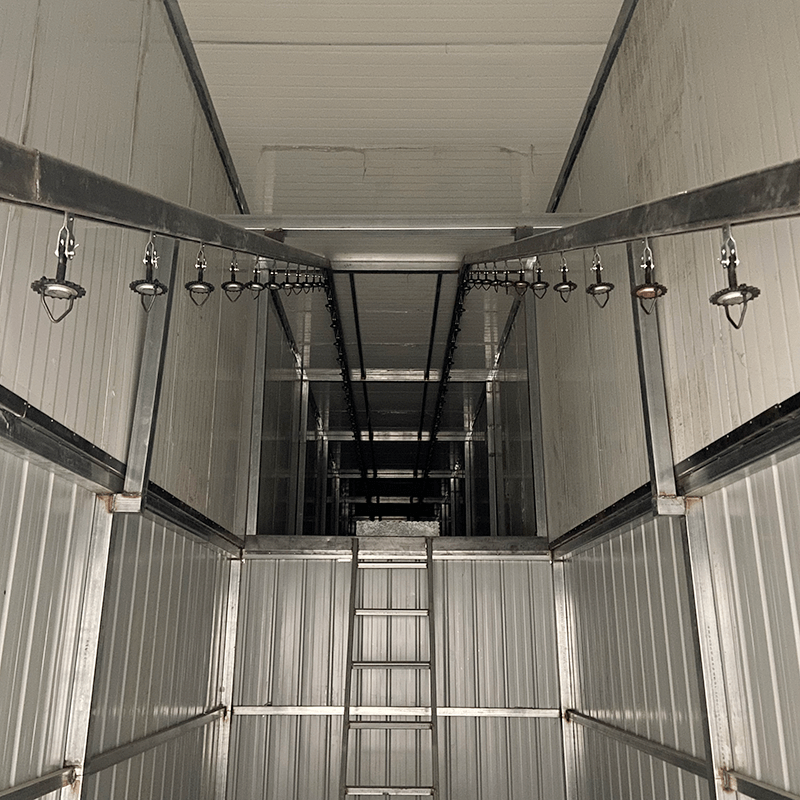
Selecting application equipment requires evaluating distinct operational dimensions. You should compare technologies based on your required outcomes rather than generic feature lists. Part geometry, line speed, and substrate material dictate your ideal application method.
HVLP (High Volume, Low Pressure) technology excels at reducing material bounce-back. It delivers a soft, highly controlled spray pattern. It works best on large, flat surfaces where finish quality matters most. However, HVLP typically offers lower throughput speeds. It suits operations prioritizing precision over rapid volume.
Electrostatic spraying revolutionizes transfer efficiency for complex parts. This method charges the paint particles negatively at the gun tip. The grounded substrate attracts these charged particles forcefully. The paint literally wraps around conductive parts like tubing, wireframes, and automotive components. Properly tuned electrostatic systems can easily push TE above 80 percent.
Airless and Air-Assisted Airless systems serve a completely different purpose. Manufacturers build these for extreme speed and high-viscosity materials. They dominate heavy industrial Coating Line applications handling structural steel or maritime components. While they apply heavy builds rapidly, they inherently produce lower TE than electrostatic options. They generate significant atomization energy, which inevitably increases overspray.
Application Tech | Primary Benefit | Ideal Substrate/Geometry | Expected Transfer Efficiency |
|---|---|---|---|
HVLP | Soft spray, low bounce-back | Flat panels, cabinetry, broad surfaces | 50% - 65% |
Electrostatic | Maximum wrap-around effect | Wireframes, tubing, complex conductive parts | 75% - 90% |
Air-Assisted Airless | High speed, thick film build | Structural steel, heavy machinery | 40% - 55% |
Decision makers must use a structured matrix to weigh these options. Always analyze your substrate material first. Non-conductive plastics require special prep for electrostatic applications. Next, evaluate part complexity. Finally, match the applicator's fluid delivery limits against your required line speed.
Operational optimization extends far beyond the spray gun itself. You must control the physical environment surrounding the entire Painting Line. Even the most advanced robotic applicators fail if booth conditions become volatile. Erratic airflow disrupts the atomized fan pattern before the paint ever reaches the part.
Airflow dynamics dictate where overspray ultimately travels. Downdraft booth designs pull clean air from the ceiling downward through floor grates. Gravity assists this process, pushing inevitable overspray away from the freshly coated part. Crossdraft booths pull air horizontally across the workspace. While more economical, crossdraft designs can sometimes drag overspray across adjacent parts on a dense conveyor.
Troubleshooting environmental variables requires a systematic approach. Watch out for these specific factors:
Temperature Fluctuations: Cold environments increase fluid viscosity, causing poor atomization and excessive pressure requirements. High heat causes rapid solvent flash-off, leading to dry spray.
Relative Humidity: Waterborne coatings rely heavily on stable humidity. High humidity prevents proper evaporation, causing sags. Low humidity dries the droplet mid-air, causing a dusty finish.
Booth Pressurization: Facilities should maintain slightly positive pressure inside the booth. This prevents dust and debris from outside the factory floor from entering the clean zone when doors open.
Maintenance best practices secure these environmental controls. You must implement predictive filter change schedules. Waiting for a pressure gauge to alert you often means airflow restriction has already occurred. Restricted airflow creates overspray turbulence. This turbulence deposits dry paint dust directly onto wet substrates, ruining the finish.
Connecting material waste to environmental compliance adds a critical authoritative lens to your operations. Regional regulatory bodies, such as the EPA, monitor industrial emissions aggressively. They track the volume of Volatile Organic Compounds (VOCs) released into the atmosphere. Every ounce of overspray contains solvents that evaporate and contribute to your total emission count.
The financial risk of non-compliance threatens business continuity. Excessive overspray directly correlates to higher VOC output. If your facility exceeds its permitted emission limits, you face severe daily fines. In worst-case scenarios, regulatory agencies can halt your production entirely until you rectify the emission breaches. Upgrading your transfer efficiency serves as a proactive legal defense.
Facilities utilizing high-efficiency application methods lower their total compliance burden. When you put more paint on the part and less in the exhaust, you generate fewer airborne solvents. This drastically improves your mitigation strategy. Many large operations utilize thermal oxidizers to destroy VOCs before exhausting air outside. High-efficiency systems send a lower volume of solvent-laden air into these oxidizers. Consequently, you spend significantly less on the natural gas energy required to burn off those captured emissions.
Procurement and engineering teams face a daunting task when selecting new equipment. You need a step-by-step framework to navigate the decision stage effectively. Haphazard purchasing leads to mismatched components and operational bottlenecks. A structured shortlisting logic guarantees you address all facility constraints.
Establish clear performance goals based on defect reduction.
Identify utility limitations, such as available compressed air and electrical capacity.
Determine spatial constraints on your existing factory floor.
Define specific cycle time requirements for high-volume production.
Before engaging any equipment vendors, you must conduct a thorough baseline audit. Measure your current transfer efficiency accurately. Document your monthly paint spend down to the gallon. Track your exact rework rates and the labor hours spent fixing defects. Without these baseline metrics, you cannot measure the success of a future upgrade.
Next, evaluate the financial feasibility by balancing initial CapEx against projected operational savings. Automated systems require a substantial upfront investment. However, you must project how drastically your raw material consumption will drop. Calculate the reduction in filter purchases and cleaning labor. Typically, the accumulated savings in paint, labor, and energy offset the initial capital expenditure within a three- to five-year horizon.
You must also carefully assess integration risks. Footprint limitations often complicate robotic installations. Verify your utility requirements immediately. Do you have sufficient clean, dry compressed air? Finally, evaluate the learning curve for your current floor operators. Advanced systems require transitioning manual painters into equipment technicians.
Your immediate next-step action involves contacting a systems integrator. Recommend scheduling a vendor-led material trial. Ship your specific parts and custom coatings to their test lab. A physical demonstration provides the most accurate data for calculating your potential efficiency gains.
Reducing overspray represents a holistic engineering challenge. It requires far more than simply bolting a new spray gun onto an old manifold. You must harmonize fluid delivery, robotic precision, and booth airflow to achieve substantial results. By prioritizing transfer efficiency, you systematically cut raw material costs and lower hazardous emissions.
Maintain a realistic perspective regarding your expected returns. Realizing these operational savings demands strict operational discipline. You must commit to ongoing equipment maintenance, daily calibration checks, and comprehensive operator training. Without this discipline, even the most expensive automation will degrade into inefficiency.
Take immediate action to stop wasting valuable resources. Request a formal transfer efficiency audit from a qualified technician today. Partnering with experienced systems integrators helps you evaluate your current setup and roadmap a highly profitable, sustainable finishing operation.
A: A good TE rate typically ranges from 60% to 85%, heavily depending on your chosen technology. Manual air-spray guns usually sit at the low end around 30% to 40%. Advanced electrostatic automation pushes efficiency to the high end, often exceeding 80% on conductive parts.
A: Facilities usually achieve ROI within 12 to 24 months. This timeframe is driven primarily by drastic raw material savings and heavily reduced labor overhead. The exact duration depends heavily on your production volume and the initial cost of the coating materials you utilize daily.
A: Yes, integrators can retrofit electrostatic equipment into existing systems. However, it requires careful evaluation. You must confirm your substrate conductivity. You also need to assess existing booth safety classifications and ensure proper electrical grounding infrastructure is in place to prevent fire hazards.
A: Airflow speed dramatically impacts atomization. If airflow moves too fast, it forcefully pulls atomized paint off the target substrate. If it moves too slow, it fails to clear the booth, causing dry spray to settle and create defects. You must balance airflow specifically to your application technology.


