

close
Choose Your Site
Global
Social Media
Views: 0 Author: Site Editor Publish Time: 2026-09-07 Origin: Site


Transitioning from isolated workstations to an integrated manufacturing system represents a critical step for scaling throughput. Modern production floors cannot afford fragmented processes when market demands push for higher volumes and tighter deadlines. Legacy or manual setups suffer from crippling bottlenecks. They rely heavily on human labor, leading to inconsistent film thickness and massive material waste. Furthermore, manual booths demand excessive downtime during slow color changeovers, bleeding potential profit.
A well-integrated Powder Coating Line changes this dynamic entirely. It does not just speed up your application phase. It synchronizes pre-treatment, precision application, and curing stages into one continuous flow. By establishing this rhythm, you stabilize unit costs, eliminate rework, and secure highly predictable production yields. You will soon discover how automated line balancing, rapid color-change technologies, and advanced recovery systems shift operational constraints into distinct competitive advantages.
Modernizing a powder coating line shifts efficiency bottlenecks from operator speed to automated line balancing, standardizing output.
Upgrading recovery systems and automated booths can reduce powder waste by up to 30-40% compared to traditional spray-to-waste setups.
Rapid color-change technologies decrease line downtime from hours to minutes, drastically improving overall equipment effectiveness (OEE) for high-mix manufacturers.
Calculating true ROI requires evaluating hidden costs, including footprint integration, operator training, and localized compliance requirements.
Manual application inherently causes operational drag. Human operators naturally vary their spray distance and speed throughout a shift. This fatigue leads to inconsistent mil-build on your parts. An uneven film thickness creates immediate problems. Too little powder leaves substrates exposed, while too much powder wastes expensive material. Both scenarios spike your reject rates. Rework then consumes extra labor hours and disrupts your daily scheduling. We must eliminate these profit leaks to scale successfully.
Outdated setups often suffer from poor transfer efficiency. Traditional spray-to-waste systems blow excess material straight into filters or exhaust vents. You lose every gram of overspray. The cost implications of this waste multiply quickly. If your transfer efficiency hovers around 50%, you literally throw away half your powder budget. An upgraded Coating Line captures and reclaims this overspray, radically improving your material utilization metrics.
Disjointed line balancing acts as an invisible ceiling on your production. In legacy setups, curing oven constraints or slow manual pre-treatment often dictate maximum output. Your application hardware sits idle while waiting for other zones to catch up. This start-and-stop rhythm leaves expensive equipment underutilized. True efficiency requires continuous momentum. When you sync the pace of every single zone, you unlock the full capacity of your facility.
Manual processing struggles heavily when handling complex parts. Items like radiators, multi-angled extrusions, or deeply recessed enclosures present severe challenges. Operators fight the Faraday cage effect, where powder repels from tight inside corners. They spend excessive time touching up these difficult areas. This localized bottleneck slows down the entire conveyor sequence. Automated systems address these complex geometries systematically, applying precise voltage and airflow to penetrate deep recesses without pausing the line.
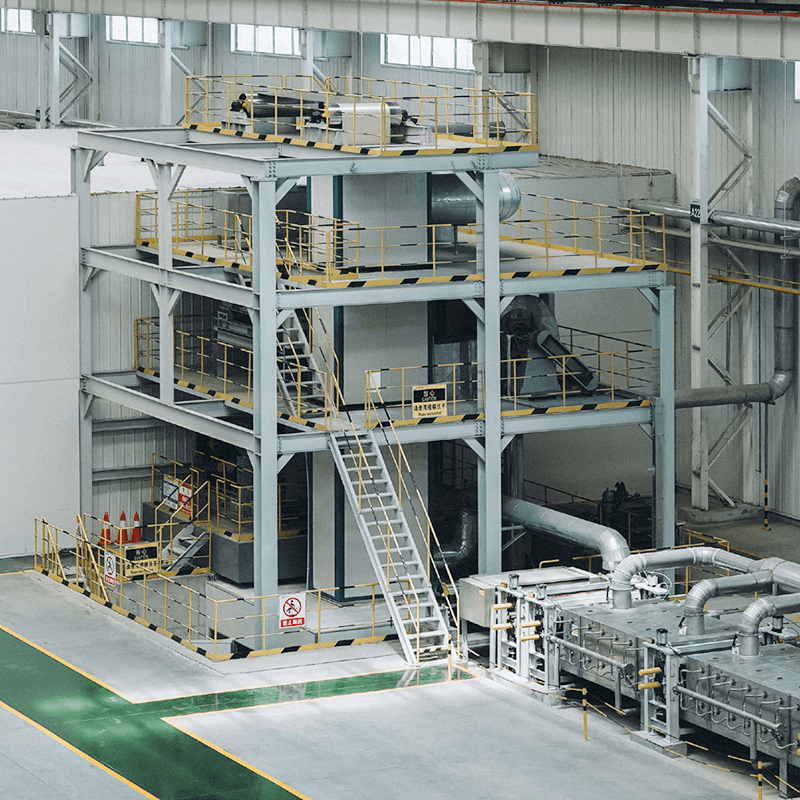
A continuous conveyor system forces a predictable production rhythm. Parts move from loading to unloading without manual intervention. Power-and-free conveyors offer even more flexibility. They allow parts to accumulate in curing ovens while maintaining higher speeds in the spray booth. Variable frequency drives (VFDs) play a crucial role here. VFDs sync the speeds of pre-treatment, spraying, and curing zones perfectly. They adjust motor speeds on the fly, ensuring no single section starves or overflows.
We must shift from human judgment to programmed automation. Automatic reciprocators move spray guns in perfect vertical strokes. They maintain an exact distance from every part. This eliminates overlapping errors and prevents thick edges. For highly complex shapes, multi-axis robots provide unmatched precision. They follow programmed contour paths reliably. You guarantee a standardized film build across thousands of parts. Consequently, your quality control becomes a formality rather than a bottleneck.
Modern booth architecture transforms material waste into usable inventory. High-performance cyclone recovery systems separate usable powder from ultra-fine waste. They route the good material right back to the feed hopper. Self-cleaning booth designs use smooth, non-conductive walls to prevent powder accumulation. These engineering improvements push material utilization rates above 95%. You buy less powder, generate less waste, and drastically lower your cost per coated part.
High-mix manufacturing demands flexibility. Older systems required hours of cleaning between colors, killing your daily throughput. Today, mechanical shifts make color changes incredibly fast. Here is a typical automated sequence:
The system initiates an automated blow-down cycle to clear hoses.
Quick-disconnect manifolds swap powder feed lines instantly.
Air knives clean the booth walls as the system purges.
The cyclone system drops the previous color collector module.
The operator slides the new color module into position.
These engineered steps reduce changeover times from multiple hours to under 15 minutes. This flexibility lets you process small batches profitably without sacrificing your overall equipment effectiveness.
Choosing the right configuration depends heavily on your part volume and color change frequency. You must evaluate your available capital realistically. A fully automated layout requires high initial investment but offers the lowest operating cost per part. Semi-automated setups provide a sensible middle ground for growing facilities.
System Configuration Comparison Chart
System Type | Ideal Part Volume | Color Change Frequency | Capital Investment |
|---|---|---|---|
Manual Batch System | Low to Medium | High | Low |
Semi-Automated Line | Medium to High | Moderate | Moderate |
Fully Automated System | Very High | Low to Moderate | High |
Surface preparation defines coating adhesion. Offline batch pre-treatment breaks your production flow. Workers must manually move parts into wash tanks and wait. Inline multi-stage washers eliminate this stop-gap. They spray heated alkaline cleaners, iron phosphates, and clean rinses as parts travel continuously. This maintains line momentum. Inline washers guarantee that parts enter the dry-off oven immediately, preventing flash rust and ensuring optimal surface readiness.
Curing constraints often bottleneck older operations. You must compare oven technologies carefully. Infrared (IR) ovens provide rapid ramp-up times. They cure the powder surface quickly using direct line-of-sight energy. Convection ovens circulate heated air, making them ideal for thick, complex parts. Many modern facilities utilize hybrid curing ovens. A hybrid oven uses an IR booster zone to gel the powder fast, followed by a convection zone for deep curing. This reduces your overall line footprint and optimizes energy consumption per unit.
Installing a complete surface finishing system requires massive physical space. You cannot ignore existing facility constraints like support columns, low ceilings, or tight loading docks. Emphasize the importance of 3D spatial planning before ordering equipment. Vendors must map the entire conveyor routing to ensure safe turning radii for your largest parts. Smart layouts often utilize vertical space, placing curing ovens on elevated mezzanines to preserve valuable floor area.
Rip-and-replace installations cause unacceptable halts in your production. You must plan a realistic timeline for a phased rollout. Keep your existing manual batch system operational while contractors build the automated infrastructure nearby. Schedule the final conveyor tie-ins and electrical hookups over long holiday weekends. Testing and commissioning require dedicated time. Phased installation avoids unexpected gaps in your current fulfillment schedule.
Automation fundamentally changes your labor requirements. You move away from manual sprayers relying on muscle memory. Instead, you need system operators and maintenance technicians. These workers manage PLC touchscreens, monitor VFD readouts, and troubleshoot robotic paths. You must acknowledge this skill gap early. Demand comprehensive, vendor-supplied training programs. Proper training ensures your team confidently runs the new hardware from day one.
Industrial finishing carries strict regulatory burdens. Your new system must meet local fire codes, particularly NFPA 33 compliance for spray application using combustible materials. You need integrated fire detection and automated suppression systems inside the booths. Ventilation standards dictate specific exhaust volumes to maintain safe breathing zones. Additionally, environmental agencies require strict permitting for your pre-treatment wash water discharge. Secure these permits well before the physical installation begins.
You must establish solid baseline metrics before approaching any equipment vendor. Document your current part throughput per hour. Calculate your precise material cost per square foot coated. Identify your current, acceptable reject rate. You cannot measure improvement without knowing where you stand today. Bring these hard numbers to vendor meetings. Demand that they guarantee specific percentage improvements based on your unique data.
Do not settle for generic, off-the-shelf components. Evaluate manufacturers based on their proven ability to provide custom engineering. Every facility handles different part weights and geometries. Demand verifiable case studies from vendors. Look for before-and-after data specifically related to line balancing and synchronization. A reliable integrator should eagerly show you how they solved throughput problems for similar manufacturing environments.
Evaluating your return on investment demands looking past the initial purchase price. You must calculate long-term operational expenditures accurately. Factor in ongoing energy usage. Compare the localized costs of running gas-fired convection ovens versus electric IR heaters. Budget for consumable replacement parts, including high-efficiency filters, gun nozzles, and pump inserts. Establish strict preventative maintenance schedules to avoid catastrophic breakdowns. By planning for these lifecycle expenses, you build a resilient, profitable business case for automation.
A modern powder coating setup operates as an integrated production engine, far exceeding the role of a simple surface finishing step.
True efficiency gains emerge when you eliminate idle time, minimize material waste, and standardize your quality control mechanically.
Advanced recovery systems and rapid color-change components drastically boost your daily flexibility and profitability.
Decision-makers should immediately audit their current throughput data to identify pacing bottlenecks.
Initiate consultations with experienced systems integrators to map out a 3D layout and conduct a thorough ROI feasibility study.
A: Most manufacturers see a positive payback within 18 to 36 months. This timeline depends heavily on your production volume. You generate rapid returns through significant labor savings, drastically reduced material waste via powder recovery, and lowered reject rates. High-volume operations often achieve ROI even faster.
A: Yes, many facilities pursue phased retrofits. You can upgrade incrementally. A common path involves adding automatic guns and reciprocators to your current booth first. Later, you can overhaul the conveyor synchronization or upgrade to a more efficient curing oven as capital allows.
A: It converts idle machine downtime into active, profitable spraying time. If you save two hours per day on changeovers, you gain 10 extra hours of production weekly. This directly increases your daily capacity, allowing you to ship more parts without adding extra labor shifts.
A: The curing oven typically consumes the most energy, followed closely by the heating stages in your pre-treatment wash. Compressed air generation for spray guns and recovery systems also draws significant power. Upgrading to hybrid ovens and variable frequency drives helps optimize these consumption ratios.


