

close
Choose Your Site
Global
Social Media
Views: 0 Author: Site Editor Publish Time: 2026-09-09 Origin: Site


Upgrading or installing a high-volume industrial paint system represents a critical CapEx decision. It dictates production bottlenecks, finish quality, and environmental compliance for the next decade. Automotive OEMs and metal fabricators face converging pressures today. You must reduce energy consumption while managing complex multi-OEM standards. Meanwhile, strict VOC (Volatile Organic Compound) compliance remains a constant, non-negotiable demand. Facilities relying on outdated equipment often struggle to meet these modern production requirements.
This guide outlines the structural frameworks and technical evaluation criteria needed to succeed. We detail the implementation realities necessary to select the right architecture for your facility. You will learn how to optimize your operations, evaluate automated configurations, and mitigate common integration risks effectively. By understanding these core principles, your engineering teams can navigate the complexities of modern surface finishing.
System Integration is the Differentiator: The most expensive failures occur not in the spray booth, but at the integration points between pre-treatment, application, curing, and conveyor systems.
CapEx vs. OpEx Trade-offs: Automated robotic lines require higher upfront investment but drastically reduce long-term operational costs related to paint waste, rework, and labor.
Multi-OEM Flexibility: Modern automotive painting lines must be engineered for agility to handle varying paint chemistries, part geometries, and OEM-specific finish standards without prolonged changeover downtime.
Compliance-Driven Design: Energy-efficient curing ovens and advanced overspray recovery systems are now mandatory for meeting evolving environmental regulations and reducing utility overhead.
Aging surface finishing systems hide massive operational penalties beneath the surface. You must look beyond simple equipment age. Legacy systems directly erode profit margins through hidden inefficiencies. Maintaining these older configurations drains resources daily. You face constant battles against contamination, poor transfer efficiency, and rising utility bills.
High defect rates destroy production yields. Outdated air makeup units often fail to filter microscopic particulates. This failure causes dirt inclusion in the final finish. Manual application leads to uneven mil thickness across complex geometries. Consequently, you spend excessive labor hours sanding, repainting, and buffering defective parts. A reliable Coating Line eliminates these inconsistencies through precise environmental control and automated application methods.
We see legacy systems create the following common defect categories:
Solvent Pop: Caused by improper flash-off times in older convection setups.
Orange Peel: Resulting from inconsistent atomization pressure in manual spray guns.
Dirt Inclusion: Originating from deteriorating HVAC filters and poor booth pressurization.
Color Drift: Driven by outdated fluid delivery systems lacking precise dosing controls.
Curing ovens and spray booth exhaust systems consume the most energy in metal manufacturing facilities. Older gas-fired ovens lack modern insulation and heat recovery systems. They waste massive amounts of thermal energy. Standard exhaust fans run at full speed continuously. They pull conditioned air out of your facility regardless of actual production volume.
Contract manufacturers face a severe bottleneck. They try to run different OEM specifications through rigid, single-process lines. This approach limits production flexibility. Each automotive brand demands unique chemistries and film builds. A rigid line forces prolonged downtime during color and material changeovers. It ultimately chokes your facility's overall capacity.
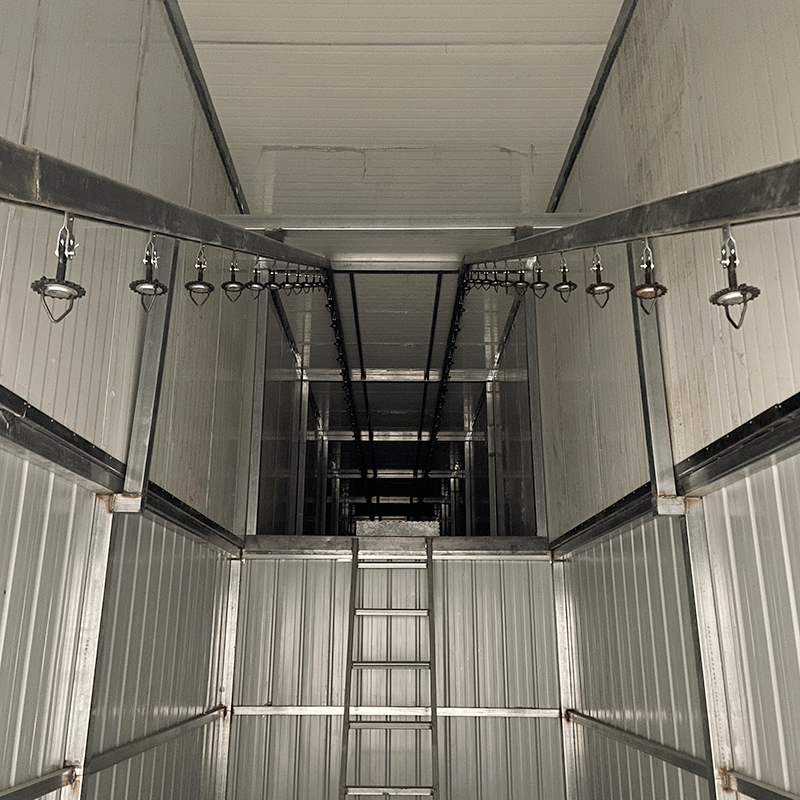
Selecting the right architecture dictates your future production capabilities. We break down the fundamental configurations available for metal and automotive applications. You must match these architectures to your specific substrate and volume requirements.
Pre-treatment systems set the foundation for finish adhesion. You generally choose between dip/immersion tanks and spray wash systems. Dip tanks work best for complex geometries needing full chemical coverage. They require a larger footprint and higher chemical volumes. Spray washers fit better in inline configurations. They use high-pressure nozzles to clean flat or moderately contoured parts efficiently.
Liquid and powder applications serve different production needs. Liquid systems excel at high-gloss automotive finishes and rapid color changes. Powder systems offer superior durability and nearly zero VOC emissions. Modern facilities often evaluate both methods. Integrating a hybrid Painting Line requires careful planning to prevent cross-contamination.
Feature | Liquid Application | Powder Application |
|---|---|---|
Finish Quality | High gloss, excellent for automotive Class-A surfaces. | Highly durable, thick build, excellent impact resistance. |
Material Recovery | Low to moderate (requires complex overspray capture). | High (up to 98% reclaimable with proper cyclone setups). |
Color Change Speed | Very fast (minutes) with automated fluid blocks. | Slower (requires booth purge unless using roll-on/roll-off booths). |
Environmental Impact | Higher VOCs (requires abatement like RTOs). | Minimal VOCs (environmentally friendly). |
E-Coat (Electrophoretic Deposition) remains essential for automotive primer layers. It provides unmatched corrosion resistance. The process uses electrical current to deposit paint uniformly across complex metal geometries. It reaches recessed areas traditional spray guns miss entirely. Automotive OEMs consider E-Coat mandatory for underbody components and chassis parts.
You must select the appropriate automation level. We categorize these into three primary tiers:
Manual Setups: Best for low-volume, high-mix custom fabrication. They rely heavily on operator skill and suffer from inconsistent transfer efficiency.
Semi-Automated Indexing: Uses programmable reciprocators and fixed gun movers. Parts stop at specific stations. It balances cost and consistency for medium volumes.
Fully Continuous Robotic Tracking: Features multi-axis robots moving in sync with a continuous conveyor. It maximizes throughput and minimizes material waste for high-volume automotive production.
Plant engineers and procurement teams need a structured framework to assess vendor proposals. You cannot evaluate a complex system based on price alone. You must scrutinize the technical parameters driving performance. An effective Automotive Painting Line balances speed, efficiency, and safety.
Throughput and line speed calculations require realistic modeling. Vendors often quote maximum conveyor speeds. However, true capacity depends on load/unload times, part density on the rack, and color changeovers. You must calculate parts per hour based on your specific product mix. Always account for standard maintenance intervals and daily startup procedures.
Footprint and layout geometry determine how the system integrates into your plant. You must maximize existing floor space while maintaining safe operator access. Common layouts include inline, U-shape, and multi-level designs. Multi-level configurations place ovens on mezzanines. This strategy frees up valuable floor space for assembly or packaging operations.
Layout Type | Primary Benefit | Typical Use Case | Space Requirement |
|---|---|---|---|
Inline Layout | Simple conveyor routing, easy visual management. | Long extrusions, continuous high-speed runs. | Requires long, narrow facility footprints. |
U-Shape Layout | Centralizes loading and unloading zones. | Standard batch parts, automotive components. | Compact, utilizes square footprints efficiently. |
Multi-Level (Mezzanine) | Maximizes vertical space, isolates heat from floor. | High-volume automotive body-in-white (BIW). | Requires high ceiling clearances and structural support. |
Application efficiency directly impacts your chemical costs. You must evaluate transfer efficiency rigorously. Electrostatic spray technology charges paint particles. Grounded parts attract these charged particles naturally. This wraps paint around the edges and minimizes overspray. Robotic atomizers paired with high-speed bells achieve the highest transfer efficiency. They reduce material consumption drastically compared to conventional spray guns.
Environmental and safety compliance remains non-negotiable. You must validate air filtration efficiency and VOC abatement strategies. High-volume liquid lines typically require Regenerative Thermal Oxidizers (RTOs). These systems destroy volatile compounds before exhausting air outside. Furthermore, your design must adhere strictly to NFPA 33 standards for spray application and general OSHA safety regulations.
Installing a massive industrial finishing system presents significant practical hurdles. You must set realistic expectations for your internal teams and stakeholders. The most sophisticated equipment will fail if the integration phase lacks rigid project management. We see many facilities underestimate the complexities of marrying mechanical, electrical, and software systems.
Greenfield and brownfield rollouts present entirely different challenges. Greenfield projects offer easier layout planning. You design the building around the equipment. However, they require strict timeline alignment with general building construction. Delays in pouring the concrete slab or installing utilities cascade into equipment installation delays.
Brownfield installations require managing construction without halting legacy production. You must navigate existing structural columns, low ceilings, and limited HVAC capacities. Often, teams must build temporary bypass lines. This strategy maintains baseline throughput during the demolition and installation phases. Careful phasing prevents catastrophic production shortages.
Commissioning delays routinely derail project timelines. You must structure rigorous Factory Acceptance Testing (FAT) and Site Acceptance Testing (SAT). FAT occurs at the vendor's facility. It verifies PLC programming and mechanical movements before shipping. SAT happens on your floor. It involves running actual parts through the completed system. Do not rush the SAT phase. Validate temperatures, airflow, and robot trajectories thoroughly.
Operator adoption involves a steep learning curve. Transitioning staff from manual spraying to managing robotic cells changes their daily responsibilities completely. They must learn to program paths, manage fluid delivery parameters, and execute preventative maintenance. Comprehensive training programs ensure your team maximizes the new system's potential.
Selecting the right integration partner determines the long-term success of your installation. You must separate equipment brokers from true turn-key engineering partners. Brokers simply resell disparate components. Turn-key partners design, manufacture, and integrate the entire system under one cohesive control architecture. They take full responsibility for overall system performance.
You must demand specific guarantees in your vendor proposals. First, require guaranteed utility consumption metrics. Ask for precise gas and electricity usage per part processed. This data proves their design's efficiency. Second, request a detailed return on investment timeline. This timeline should highlight savings from chemical usage reductions and labor reallocation.
Clear delineation of sub-contractor responsibilities prevents disputes during installation. Your contract must define who handles PLC programming, mechanical rigging, and electrical drops. Ambiguity here leads to change orders and budget overruns. Always verify their safety records and insurance coverages before allowing them on site.
Post-installation support separates average vendors from exceptional partners. Evaluate their Service Level Agreements (SLAs) closely. You need guaranteed response times for software troubleshooting. Ensure they maintain domestic spare parts inventory for critical wear items like atomizer turbines and pump seals. Finally, demand ongoing preventative maintenance training for your internal maintenance staff. This empowers your team to handle routine service internally.
Selecting a modern industrial finishing system requires balancing mechanical reliability, software integration, and environmental engineering. You cannot treat this decision as a simple equipment replacement. It demands a holistic view of your facility's operational flow. The right architecture eliminates bottlenecks, slashes energy waste, and ensures compliance with tightening regulations.
Your team should focus on mitigating integration risks early in the planning phase. Prioritize transfer efficiency and thermal recovery to maximize long-term savings. Thorough operator training guarantees you capture the full value of automated upgrades.
Begin your project with a comprehensive site audit. Collect baseline data on your current energy use, defect rates, and material consumption before releasing an RFQ. We strongly advise requesting a technical consultation or an engineering assessment from a qualified integrator to define your precise system requirements.
A: Design, fabrication, and installation generally range from 6 to 12 months. This timeline depends heavily on system complexity, footprint size, and automation levels. Permitting and environmental approvals can also extend the schedule. Engaging an integrator early ensures you align building readiness with equipment delivery.
A: You detail primary ROI drivers to build your justification. Calculate savings from reduced coating material waste due to improved transfer efficiency. Factor in lower direct labor costs and decreased rework or scrap rates. Finally, include the substantial energy savings generated by modernized, insulated curing ovens.
A: Yes, but you must manage severe mechanical and contamination risks. Shared pre-treatment or curing ovens are possible in hybrid setups. However, application booths, air makeup units, and recovery systems must remain strictly separated. Cross-contamination destroys finish quality instantly.
A: You must utilize phased implementation strategies. Schedule major demolition and integration tasks during holidays or planned facility shutdowns. Additionally, building modular bypass lines allows you to maintain baseline throughput during construction. Close coordination with your integrator prevents unexpected production halts.


