

close
Choose Your Site
Global
Social Media
Views: 0 Author: Site Editor Publish Time: 2026-08-07 Origin: Site


Transitioning from outsourced finishing or outdated liquid painting to an in-house powder coating setup is a critical operational leap. You protect profit margins and gain total quality control over your final products. However, evaluating complex coating infrastructure carries significant risks. Many manufacturers make the costly mistake of prioritizing cheap upfront equipment costs. They ignore vital long-term factors like transfer efficiency, utility consumption, and overall system reliability. This oversight often leads to bottlenecked production and frequent field failures in the applied finish. You need a solid, data-driven strategy to navigate these large capital investments safely. This guide provides a vendor-neutral, engineering-focused framework. We will help you evaluate and shortlist industrial powder coating systems effectively. You will learn how to balance throughput, application efficiency, and layout realities. By applying these principles, you ensure consistent industrial finishing while protecting your bottom line.
The choice between batch and automated systems must be dictated by part geometry, throughput volume, and color-change frequency, not just available floor space.
Pretreatment architecture is the highest-impact variable for finish longevity; under-engineering this stage leads to field failures regardless of coating quality.
Total Cost of Ownership (TCO) for a coating line is heavily skewed by energy consumption during curing and powder recovery efficiency, making cheap systems expensive to operate.
Compliance with environmental and fire safety standards (e.g., NFPA 33) must be integrated into the facility layout before equipment selection begins.
Implementing a highly efficient Powder Coating Line requires clear operational benchmarks. You cannot design a system without establishing precise throughput and flexibility metrics. Engineering teams must first map the maximum part envelope. This envelope defines the largest and heaviest single item you plan to coat. Once you know this dimension, you can accurately calculate parts per hour (PPH). PPH directly dictates your required line speed. Faster line speeds demand larger wash stages and longer curing ovens. You must balance throughput goals against your facility constraints.
Transfer efficiency represents another critical success metric. First-pass transfer efficiency (FPTE) measures how much powder adheres to the part on the first spray. Poor FPTE sends excessive powder into the recovery system or the scrap bin. This waste destroys profit margins quickly. Repeatable mil thickness also drives financial performance. Applying three mils when the specification calls for two mils wastes 50% more powder. You need highly consistent application equipment to maintain tight thickness tolerances.
You must also define strict uptime and maintenance thresholds. Unplanned downtime destroys production schedules. A successful integration requires predefined maintenance intervals.
Mean Time Between Failures (MTBF): Track the expected lifespan of critical wear parts like pump inserts and gun nozzles.
Preventative Maintenance Windows: Allocate specific weekly hours for booth cleaning and hook stripping.
Downtime Costs: Calculate the hourly cost of line stops to justify buying higher-quality components upfront.
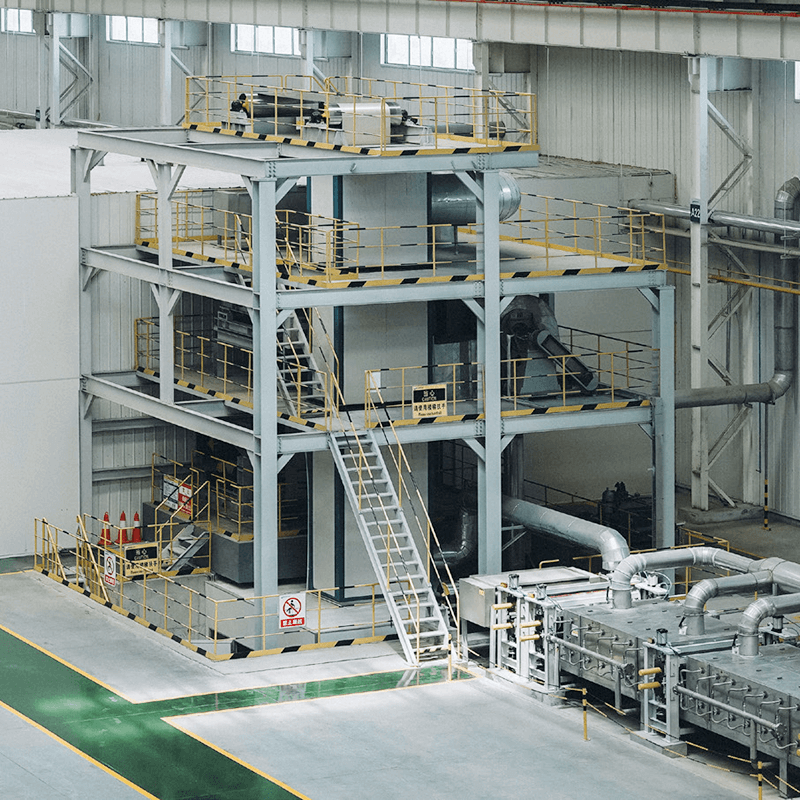
You must let production data drive your architecture choice. Available floor space matters, but part geometry and color-change frequency matter more. Manufacturers typically choose between discrete batch setups and continuous automated lines.
Batch powder coating systems work best for high-mix, low-volume operations. They easily accommodate exceptionally large or heavy parts. Facilities facing severe layout constraints often rely on batch processing. However, these systems involve distinct trade-offs. You will face higher manual labor costs per unit. Throughput remains slower because parts move manually between stages. You also risk quality inconsistencies between different human operators.
Automated lines handle high-volume, continuous production effortlessly. They require consistent part geometries to maximize efficiency. Operations seeking minimal manual labor per unit prefer automation. When evaluating automated systems, you must assess conveyor styles closely. Overhead I-beam monorails offer simple, continuous movement. Power-and-free conveyors allow parts to stop inside spray booths while the rest of the chain keeps moving. You must also synchronize automated gun positioning with the central line speed.
Use a specific decision lens to find the tipping point. You must calculate exactly when automated line efficiency offsets the heavy initial capital expenditure.
Evaluation Metric | Batch System Architecture | Automated Line Architecture |
|---|---|---|
Production Volume | Low to medium throughput | High, continuous throughput |
Part Geometry | Highly variable, massive sizes | Uniform, predictable envelopes |
Labor Requirements | High manual intervention | Low manual intervention |
Color Change Speed | Fast, relatively simple | Slower, requires complex purging |
Capital Investment | Lower initial layout cost | Heavy upfront engineering cost |
A successful installation relies on the quality of its individual stages. You must carefully engineer the wash, application, and curing components.
Pretreatment dictates final adhesion quality. You can apply the best powder perfectly, but poor pretreatment guarantees field failures. Multi-stage wash systems handle the chemical bonding process. Traditional iron phosphate systems require three to five stages. Newer zirconium-based nanoceramics operate at ambient temperatures and create less sludge. You must select the chemistry that best fits your substrate. Many buyers make the mistake of under-sizing wash stages to save footprint. Shortened wash zones prevent proper chemical contact times. This compromise ruins adhesion and invites rapid corrosion.
You must evaluate booths based on your color-change frequency. Cartridge-style booths trap overspray in internal filters. They work incredibly well for single-color operations. However, changing colors in a cartridge booth takes significant time and labor. If you run fast, frequent color changes, you need cyclone recovery systems. Cyclones use centrifugal physics to separate heavy powder particles from the air stream. They allow operators to clean the booth and change colors in minutes.
Airflow Management: Ensure the booth maintains adequate cubic feet per minute (CFM) to contain overspray.
Operator Safety: Proper draft prevents powder from escaping into the broader factory environment.
Recovery Efficiency: High-end cyclones recover up to 95% of oversprayed powder for reuse.
Curing ovens transform the applied powder into a durable shell. You generally choose between convection ovens and infrared (IR) systems. Convection ovens circulate heated air to bake parts evenly. IR ovens use direct radiant energy to gel the powder rapidly. Many modern lines use combination systems. An IR boost zone gels the powder quickly, and a convection zone finishes the crosslinking process.
You must apply a skeptical check during vendor evaluations. Some vendors quote undersized ovens to present a cheaper bid. An undersized oven cannot transfer enough heat to heavy parts in the allotted time. When this happens, operators must slow down the entire conveyor to achieve proper crosslinking. This hidden flaw destroys your targeted throughput.
Installing a new Coating Line disrupts your factory floor. You must navigate physical space, power availability, and strict regulations.
Equipment dimensions represent only half of the layout challenge. You must document the realities of material handling. Conveyor turning radiuses require significant empty space. Long parts swing wide on tight corners, causing costly collisions. You also need dedicated load and unload staging areas. Workers need room to maneuver carts and forklifts safely around the line. Finally, verify your ceiling heights. Ovens and cyclone dust collectors often require high clearances. Sometimes, routing the conveyor through elevated ovens frees up valuable floor space below.
Coating lines consume massive amounts of energy. You must audit your existing utility infrastructure before committing to any system specifications. Check your natural gas supply pressure. Curing ovens draw enormous BTUs to maintain temperatures. Next, verify your electrical panel capacity. Air compressors, booth fans, and conveyor drives require high-amperage, three-phase power. Finally, evaluate your wastewater treatment capabilities. Multi-stage pretreatment washers generate continuous effluent. Your local municipality heavily regulates the pH and heavy metal content of this discharge.
Industrial finishing carries inherent safety risks. You must integrate non-negotiable standards into your layout immediately. OSHA regulations dictate worker ergonomics and air quality standards around the line. You must strictly adhere to NFPA 33 guidelines. NFPA 33 governs spray applications using combustible materials. Powder coating dust becomes explosive under specific concentrations. Your spray booths require interlocked fire detection and suppression systems. You may also need local air quality permits depending on your pretreatment burner emissions and volatile organic compound (VOC) output.
Not all equipment manufacturers deliver on their promises. You must protect your investment by thoroughly vetting potential vendor partners.
Never buy an automated system based on a brochure. You must require vendors to run your actual parts through their test lab. Provide them with your heaviest, most complex component. Let them prove their exact wash chemistry, gun placement, and oven dwell times. Lab testing reveals hidden Faraday cage effects in tight corners. It also proves whether their quoted line speed actually cures your specific part. Finalize your equipment specifications only after witnessing successful lab results.
Quotes often hide critical scope gaps. You must clarify the difference between "turnkey" and "equipment-only" contracts. An equipment-only quote merely drops crates on your loading dock. You become responsible for assembly, rigging, and integration. A true turnkey contract covers everything through initial production runs. Watch out for hidden costs. Vendors frequently exclude exhaust ductwork through your roof, primary electrical drops, and gas piping from the meter. Define exactly who pulls the local mechanical and fire permits before signing.
The relationship truly begins after the commissioning phase. Evaluate the vendor’s domestic parts inventory carefully. When a pump or drive motor fails, you cannot wait three weeks for overseas shipping. Ask about their technical support response times. Do they offer 24/7 phone support? Can their technicians dial into your PLC remotely for troubleshooting? You should also request information on their preventative maintenance programs. High-quality vendors offer quarterly inspection visits to keep your system running at peak efficiency.
A successful powder coating integration demands balancing upfront design rigor with long-term operational efficiency. You cannot afford to cut corners on pretreatment stages or curing ovens. Prioritize part geometries, reliable utility capacity, and automated flexibility to maximize your production output.
Your next steps require immediate action on the factory floor. Start by conducting a detailed facility utility audit. Measure your available gas, power, and ceiling heights accurately. Concurrently, establish a firm parts-per-hour target based on your largest part envelope.
Do not navigate this complex engineering process alone. Bring in experts early to avoid costly layout mistakes. Schedule a technical consultation today or request a custom facility layout assessment to kickstart your finishing upgrade.
A: Automated lines demand significant floor space. The exact footprint depends on conveyor speed, oven dwell time, and pretreatment stages. A line running at five feet per minute needs a larger oven than one running at three feet per minute. You can sometimes utilize vertical space. Mezzanines can house curing ovens or dry-off ovens. This vertical approach saves valuable ground-level footprint. Always map your part envelope first.
A: Custom industrial finishing systems require substantial planning. Typical lead times range from 12 to 24 weeks. This timeframe depends heavily on system complexity and current supply chain factors. Turnkey installations take longer than simple equipment drops. Engineering approvals, custom ductwork fabrication, and local permitting also add time. You should finalize your facility layout well before signing a purchase order.
A: Upgrading a batch setup to automation is rarely straightforward. You face severe limitations when retrofitting. You can sometimes transition application components like guns and certain booths. However, ovens and pretreatment stages usually require total replacement. Batch ovens cannot accommodate continuous conveyor chains. You usually achieve better performance by designing a purpose-built automated system from scratch.


