

close
Choose Your Site
Global
Social Media
Views: 0 Author: Site Editor Publish Time: 2026-01-28 Origin: Site


In today's highly competitive manufacturing environment, surface protection and consistency are no longer optional—they are essential. Among all modern surface finishing technologies, the coating line based on electrophoretic deposition has become a benchmark solution for corrosion resistance, coating uniformity, and large-scale industrial efficiency. From automotive bodies and auto parts to heavy machinery and metal components, an electrophoretic coating line plays a vital role in ensuring product durability and long-term value.
This ultimate guide provides an in-depth, practical, and data-oriented explanation of electrophoretic coating line systems. It covers the electrophoretic coating process, analyzes real-world e-coating line advantages, and offers actionable insights into e-coating line maintenance, all aligned with actual Google user search intent and industrial decision-making needs.
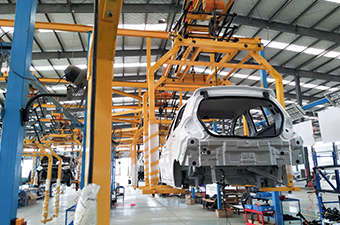 An electrophoretic coating line, often referred to as an E-coating line, is an advanced coating line that uses an electric field to deposit coating material uniformly onto conductive substrates. Unlike traditional spray-based coating lines, this coating line relies on electrochemical principles to ensure complete and even coverage, including recessed areas and internal cavities.
Within a modern industrial coating line, electrophoretic deposition is most commonly used as a primer coating due to its exceptional corrosion resistance and film consistency. As part of a fully integrated production system, the electrophoretic coating line significantly enhances overall surface quality while reducing material waste.
The electrophoretic coating line has become a cornerstone technology in industries where performance and reliability matter most.
Key reasons manufacturers adopt this type of coating line include:
Consistent coating thickness across complex geometries
Superior corrosion protection
High material utilization rates
Excellent automation compatibility
Long service life of coated products
For industries such as automotive manufacturing, where anti-corrosion performance directly affects safety and brand reputation, the electrophoretic coating line is often non-negotiable.
The electrophoretic coating process is the core mechanism that differentiates this coating line from other surface finishing systems. It involves immersing parts into a water-based coating bath and applying an electric current to drive coating particles onto the surface.
Pretreatment
Parts undergo degreasing, rinsing, and phosphating to ensure proper adhesion.
Electrophoretic Deposition
During the electrophoretic coating process, coated parts are submerged in an E-coating bath, where electrical current causes paint particles to migrate evenly toward the substrate.
Ultrafiltration and Rinsing
Excess coating material is recovered and reused, improving efficiency within the coating line.
Curing and Baking
Heat treatment solidifies the coating, forming a dense and corrosion-resistant film.
Cooling and Inspection
Final inspection ensures quality standards are met.
This highly controlled electrophoretic coating process ensures stable results even in high-volume production environments.
A modern electrophoretic coating line consists of several interconnected systems working together as a unified whole.
| Component | Function |
|---|---|
| Pretreatment system | Surface cleaning and activation |
| E-coating tank | Coating deposition |
| Power supply | Electrical control |
| Ultrafiltration system | Paint recovery |
| Curing oven | Film solidification |
| Conveyor system | Material handling |
| Control system | Process automation |
Each component plays a crucial role in maintaining the stability and efficiency of the coating line.
One of the most common user search intents is understanding the real e-coating line advantages compared to alternative coating line technologies such as spray painting or powder coating.
Exceptional Uniformity
The electrophoretic coating line ensures even film thickness on both visible and hidden surfaces.
Superior Corrosion Resistance
Ideal for automotive bodies, frames, and structural components.
High Material Utilization
Recovery systems reduce paint waste to minimal levels.
Automation-Friendly
Easily integrated into fully automated coating line systems.
Environmentally Responsible
Water-based coatings result in low VOC emissions.
These e-coating line advantages make electrophoretic systems indispensable in high-end manufacturing.
To better illustrate performance differences, the following table compares an electrophoretic coating line with traditional spray and powder systems.
| Performance Metric | Electrophoretic Coating Line | Spray Coating Line | Powder Coating Line |
|---|---|---|---|
| Coating uniformity | Excellent | Medium | Good |
| Corrosion resistance | Excellent | Medium | Good |
| Material utilization | High | Low | Very high |
| VOC emissions | Low | High | Zero |
| Automation level | High | Medium | High |
This comparison highlights why many manufacturers choose electrophoretic coating line systems as the foundation of their surface finishing strategy.
The electrophoretic coating line is widely used in industries that demand consistent quality and long-term protection.
Automotive bodies and chassis
Auto parts and structural components
Agricultural machinery
Construction equipment
Metal enclosures and cabinets
Manufacturers with deep experience in these sectors, including system integrators with decades of accumulated expertise like BONITA MACHINERY CO., LTD., often focus on optimizing electrophoretic coating line performance to match industry-specific requirements.
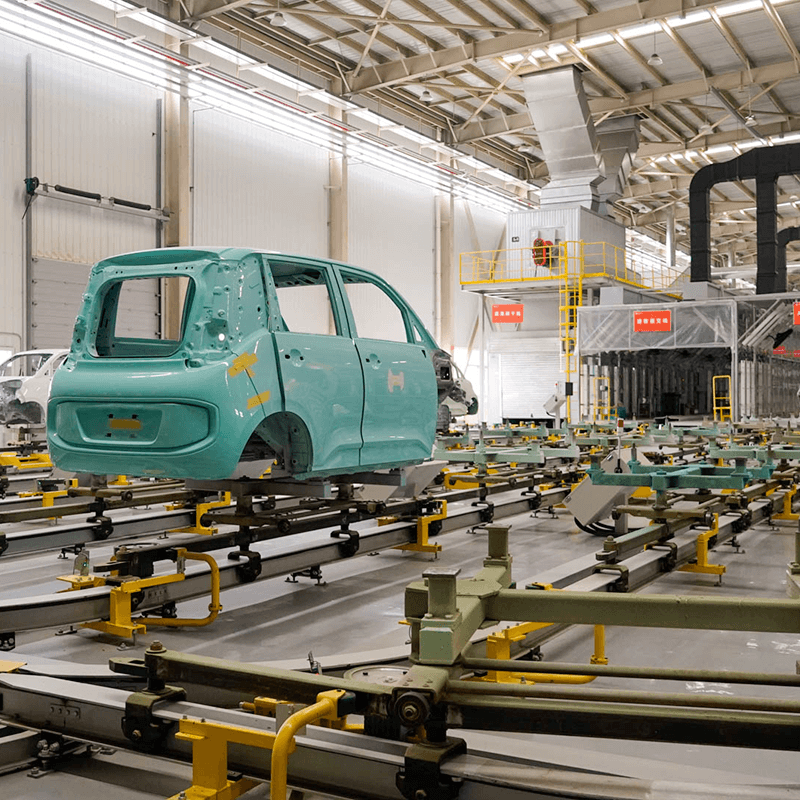
Effective e-coating line maintenance is essential to protect investment and ensure stable coating line operation over decades.
Without proper e-coating line maintenance, even the most advanced coating line can experience issues such as:
Uneven film thickness
Reduced corrosion resistance
Increased operating costs
Unplanned downtime
A proactive maintenance strategy significantly extends the service life of the coating line.
Monitor bath temperature and pH
Check electrical parameters
Inspect conveyor and grounding systems
Clean ultrafiltration membranes
Inspect tank linings and seals
Calibrate control systems
Full system inspection
Performance benchmarking
Preventive component replacement
Well-planned e-coating line maintenance ensures consistent coating quality and predictable production output.
Even with proper e-coating line maintenance, occasional issues may arise.
| Problem | Possible Cause | Solution |
|---|---|---|
| Poor adhesion | Inadequate pretreatment | Improve cleaning process |
| Uneven coating | Electrical imbalance | Adjust voltage distribution |
| High paint loss | Ultrafiltration failure | Service recovery system |
Rapid diagnosis and correction prevent minor issues from escalating into major coating line failures.
The future of the electrophoretic coating line is closely linked to smart manufacturing trends.
Intelligent process control systems
Energy-efficient curing ovens
Real-time coating thickness monitoring
Integration with digital factory platforms
These innovations further strengthen e-coating line advantages in high-volume manufacturing environments.
The main purpose of an electrophoretic coating line is to provide uniform, corrosion-resistant coating for conductive parts.
The electrophoretic coating process typically takes several minutes for deposition, followed by curing time depending on coating specifications.
Yes, electrophoretic coating line systems use water-based coatings with low VOC emissions.
Routine e-coating line maintenance should be performed daily, weekly, and annually according to system complexity.
Yes, many manufacturers integrate electrophoretic coating line systems with powder or painting lines for complete surface finishing solutions.
The electrophoretic coating line represents one of the most advanced and reliable surface finishing technologies available today. By understanding the electrophoretic coating process, leveraging real e-coating line advantages, and implementing structured e-coating line maintenance, manufacturers can achieve consistent quality, reduced costs, and long-term operational stability.
As manufacturing continues to evolve toward automation and sustainability, the electrophoretic coating line will remain a cornerstone technology for industries that demand excellence, precision, and durability.


