

close
Choose Your Site
Global
Social Media


A coating line is a complete, integrated production system designed to apply protective or decorative coatings to products in a controlled, efficient, and repeatable manner. In modern manufacturing, the coating line is no longer just a supporting facility—it is a critical part of product quality, brand perception, and production efficiency. From automotive components and home appliances to steel structures and industrial parts, the coating line plays a decisive role in surface performance and durability.
This article provides a comprehensive, in-depth explanation of what a coating line is, how a coating line works, its core components, the coating line process, and how it fits into an industrial coating system and a surface finishing line. We also analyze industry trends, data-driven comparisons, and real-world manufacturing considerations to help decision-makers better understand and select the right coating line for their needs.
A coating line refers to a series of interconnected machines and processes that clean, prepare, coat, cure, and inspect products. Unlike standalone coating equipment, a coating line functions as a fully automated or semi-automated industrial coating system, ensuring consistency, efficiency, and scalability.
In essence, a coating line transforms raw or semi-finished parts into finished products with enhanced corrosion resistance, wear resistance, appearance, and functional properties. As manufacturing shifts toward automation and smart factories, the coating line has become a core element of the modern surface finishing line.
Key reasons why a coating line matters:
Ensures uniform coating thickness and quality
Improves production efficiency and throughput
Reduces material waste and operational costs
Enhances environmental compliance
Supports mass production and customization
A standard coating line is composed of multiple subsystems, each contributing to the overall coating line process. Below is a breakdown of the essential components commonly found in an industrial coating system.
| Component | Function |
|---|---|
| Pretreatment system | Cleans and prepares surfaces |
| Coating application unit | Applies paint, powder, or electrophoretic coating |
| Curing or drying oven | Solidifies the coating |
| Conveying system | Transfers parts through the coating line |
| Control system | Manages automation and process parameters |
| Inspection & recovery | Ensures quality and material reuse |
Each module in the coating line must be precisely coordinated. A well-designed surface finishing line integrates all components seamlessly to minimize downtime and maximize output.
The coating line process is the heart of any coating line. While the specific steps may vary depending on coating type, most coating line operations follow a structured workflow.
Pretreatment
The first stage in the coating line process involves degreasing, rinsing, phosphating, or sandblasting to ensure surface cleanliness and adhesion.
Drying
After pretreatment, parts are dried to remove moisture before entering the coating zone.
Coating Application
This is the core of the coating line, where paint, powder, or electrophoretic materials are applied using spray guns, immersion tanks, or rollers.
Curing / Baking
Heat or UV energy is used to cure the coating, forming a durable and uniform film.
Cooling and Inspection
Products cool down and undergo inspection to ensure quality standards are met.
A modern industrial coating system optimizes each step of the coating line process using automation, sensors, and data monitoring.
Different industries require different coating line configurations. Understanding these types helps manufacturers select the most suitable surface finishing line.
Painting Line
Widely used in automotive and appliance industries.
Powder Coating Line
Known for high material utilization and environmental friendliness.
Electrophoretic (E-Coating) Line
Ideal for complex geometries and corrosion protection.
Dip Coating Line
Suitable for uniform coating on small or intricate parts.
UV Coating Line
Used for fast curing and high-gloss finishes.
Each coating line type represents a specialized industrial coating system, yet all follow the same fundamental coating line process logic.
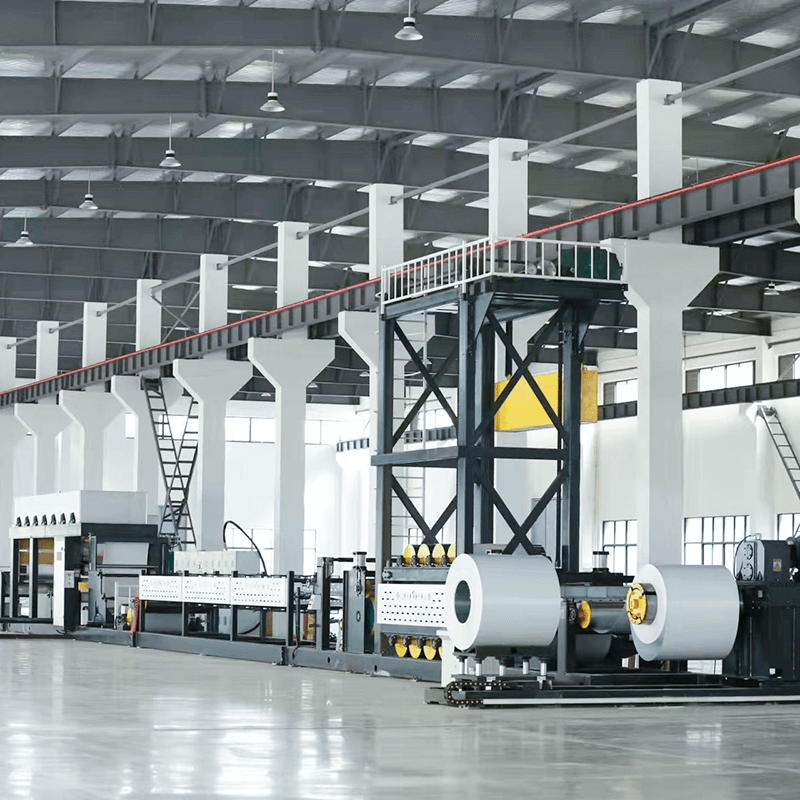
Compared to manual or semi-manual coating methods, a modern coating line offers significant advantages.
| Aspect | Traditional Coating | Modern Coating Line |
|---|---|---|
| Efficiency | Low | High |
| Consistency | Variable | Stable |
| Labor cost | High | Reduced |
| Environmental control | Limited | Advanced |
| Scalability | Poor | Excellent |
This comparison highlights why manufacturers increasingly invest in advanced coating line solutions as part of an integrated surface finishing line.
The coating line industry is evolving rapidly, driven by sustainability, digitalization, and smart manufacturing.
Automation and Robotics
Automated spray robots improve accuracy and reduce defects in the coating line.
Energy Efficiency
New ovens and heat recovery systems reduce energy consumption in the coating line process.
Environmental Compliance
VOC reduction and powder-based industrial coating systems support stricter regulations.
Smart Monitoring
IoT-enabled sensors allow real-time monitoring of the coating line.
Companies with long-term expertise in surface finishing line integration, such as BONITA MACHINERY CO., LTD., leverage decades of accumulated know-how to deliver intelligent, high-performance coating line solutions for automotive and industrial customers worldwide.
Data analysis shows that upgrading to a modern coating line can dramatically improve operational performance.
| Metric | Improvement After Upgrading Coating Line |
|---|---|
| Production efficiency | +25–40% |
| Coating material utilization | +15–30% |
| Defect rate | −20–50% |
| Energy consumption | −10–25% |
These figures demonstrate how a well-designed industrial coating system directly impacts profitability and competitiveness.
Selecting the right coating line requires aligning production needs with technical capabilities.
Product size and geometry
Required coating type and thickness
Production volume and takt time
Environmental and safety regulations
Level of automation
An experienced coating line supplier with strong system integration capabilities can help tailor a surface finishing line that balances performance, cost, and scalability.
Even the most advanced coating line faces operational challenges if not properly managed.
Uneven coating thickness
Poor adhesion due to inadequate pretreatment
High energy consumption
Conveyor synchronization problems
Regular maintenance and optimization of the coating line process are essential to ensure long-term stability of the industrial coating system.
A coating line is widely used in automotive manufacturing, auto parts, home appliances, steel structures, furniture, and heavy machinery industries.
The coating line process duration depends on coating type and curing method, typically ranging from several minutes to over an hour.
Modern coating line designs emphasize low emissions, material recycling, and energy efficiency, making them far more sustainable than traditional methods.
A coating line focuses specifically on applying coatings, while a surface finishing line may include additional processes such as polishing or mechanical treatment.
Yes, a coating line can be fully customized to match product specifications, output requirements, and factory layouts.
Understanding what a coating line is goes far beyond knowing its definition. A coating line is a strategic investment that integrates technology, process control, and industrial experience into a single industrial coating system. By mastering the coating line process and aligning it with modern surface finishing line trends, manufacturers can achieve higher quality, lower costs, and stronger market competitiveness.
As global manufacturing continues to evolve, the coating line will remain a cornerstone of efficient, intelligent, and sustainable production systems.


