

close
Choose Your Site
Global
Social Media
Views: 0 Author: Site Editor Publish Time: 2026-08-12 Origin: Site


Outgrowing manual capacity is the primary catalyst for upgrading your finishing operations. You likely face unacceptable variance in finish quality across batches. Your unit costs might be climbing too high to remain competitive. Transitioning to automation demands a significant capital expenditure. It shifts operational bottlenecks away from manual labor and application time. Instead, pre-treatment speeds and curing times become your new constraints. Why does this matter? Simply buying robots will not fix fundamentally broken processes. You need to know if your product mix justifies the investment. We provide an evidence-based framework here. You will learn how to evaluate your current bottlenecks objectively. We will explore exactly which applications and production volumes justify integrating an automated system. This ensures you make strategic scaling decisions based on data.
Automated coating lines deliver the highest ROI in industries requiring high-volume, repeatable part runs with strict mil-thickness tolerances.
The business case relies heavily on material reclamation (overspray recovery), reduced manual rework, and optimized labor allocation rather than just throughput speed.
Metal fabrication, automotive, architectural, and appliance manufacturing are the primary beneficiaries due to their specific compliance and durability requirements.
Successful implementation requires assessing facility footprint, utility capacity, and the necessity of quick color-change capabilities.
Manual systems eventually hit a hard ceiling. Symptoms of a strained manual system look remarkably similar across different manufacturing plants. You might observe inconsistent film builds on your parts. One operator sprays too thick, while another sprays too thin. Excessive powder waste becomes the daily norm. High labor turnover disrupts your weekly scheduling. Parts constantly queue at the spray booth, creating a massive factory bottleneck. These issues signal a desperate need for change. Recognizing this tipping point is your first step toward modernization.
Automation naturally favors high-volume, uniform parts. It also works beautifully for programmable families of parts. Low-volume, highly complex custom geometries often struggle in fully automated setups. When you run thousands of identical brackets, automated spray guns shine. If you custom-fabricate one-off sculptures, manual spraying remains superior.
Production Volume and Part Complexity Matrix
Production Volume | Part Complexity | Automation Suitability | Primary Strategy |
|---|---|---|---|
High | Low to Medium | Excellent | Fully automated reciprocators and robotic arms. |
High | High | Good | Automated baseline coating followed by manual touch-ups. |
Low | Low | Fair | Semi-automated batch systems. |
Low | High | Poor | Manual spray booths and skilled operators. |
Quality and compliance drive this industrial shift. Automated reciprocators eliminate human fatigue entirely. Robotic guns apply consistent mil-thickness hour after hour. You absolutely need this precision to pass stringent industry tests. Salt-spray testing and cross-hatch adhesion tests demand perfectly uniform coverage. Human sprayers simply cannot maintain this exactness over a demanding eight-hour shift. Automation removes the variable of human error from your quality control equation.
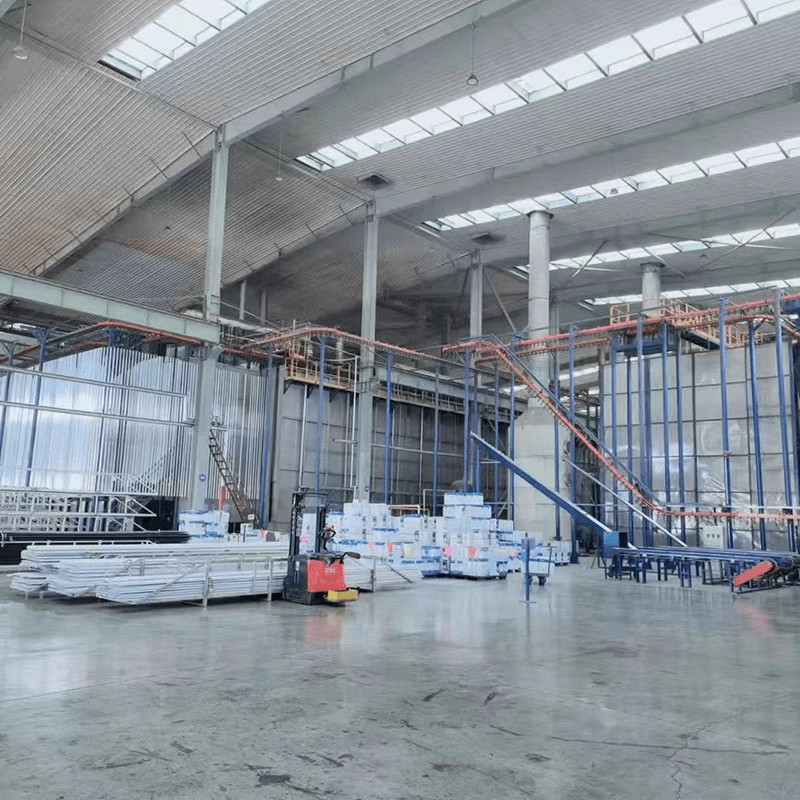
Different manufacturing sectors see varying returns from upgrading to an automated Powder Coating Line. Let us examine the main beneficiaries and their specific evaluation criteria.
Automotive parts require extreme corrosion resistance. UV stability is non-negotiable for exterior components. Under-hood components need incredibly high chemical resistance to withstand fluids and heat. OEMs set remarkably strict supplier quality standards. You cannot afford a single batch failure.
Robotic precision ensures perfectly even application. Chassis, wheels, and suspension components feature highly complex geometries. Automated arms navigate these shapes effortlessly. They adhere strictly to OEM supplier standards. This eliminates costly warranty claims down the line. Automation guarantees your parts withstand harsh road conditions for years.
Fabricators constantly handle high-mix, medium-to-high volume runs. They need predictable lead times to satisfy diverse clients. Tight margin control keeps them competitive in a crowded market. Speed and flexibility define success here.
A modern automated system offers rapid color-change booths. Fabricators can switch jobs in minutes rather than hours. Manual changeovers historically drain plant productivity. Quick color-change technology maintains continuous operational flow. It allows contract manufacturers to bid on more diverse jobs confidently.
Consumer goods demand flawless, Class-A aesthetic finishes. High scratch resistance is expected by modern buyers. Appliance manufacturers operate at massive production scales. A single aesthetic defect ruins the product's showroom appeal.
Automated electrostatic application guarantees consistent edge coverage. It delivers incredibly smooth finishes on large appliance panels. This minimizes costly aesthetic rejects. Rework plummets when programmed robots handle the repetitive spraying tasks. Manufacturers save thousands of dollars daily on reclaimed powder and reduced scrap rates.
Architectural firms process extremely long, heavy extrusions. Think of heavy aluminum window frames and industrial security fencing. These materials require AAMA-compliant weatherability to survive decades outdoors.
Conveyor-fed automated systems process oversized components continuously. Parts move safely through pre-treatment, spraying, and curing stages. Automation entirely eliminates manual handling damage. Heavy parts stay secure on the line from start to finish. This continuous flow prevents scratching and denting before the paint even cures.
Evaluating an investment means looking beyond simple line speed. You must understand how advanced technology impacts your daily operating costs.
Automated systems utilize advanced electrostatics to maximize transfer efficiency. They rely on robust reclaim systems like cyclones or advanced cartridges. These mechanisms capture and reuse up to 95% of your overspray. Reclaiming overspray drastically lowers daily powder costs. Your material utilization skyrockets immediately. Manual spraying often wastes up to half of the virgin powder. Reclaiming this material represents a massive financial win.
Automation rarely eliminates the coating department completely. Instead, it changes how you deploy your team. Manual sprayers shift into valuable quality control roles. They manage sophisticated system programming. Pre-treatment chemical management needs careful oversight. You upskill your existing workforce rather than fire them. Your modern Coating Line becomes safer, cleaner, and dramatically more productive.
We establish a baseline ROI framework by comparing specific metrics. Look closely at your current cost-per-part. Include manual labor, wasted powder, and your specific rework rate. Compare this directly against the projected automated cost-per-part. Factor in routine maintenance for the robots. Include estimated energy consumption for larger ovens. You will typically see a payback period driven entirely by material savings and slashed rework rates. Speed is merely a secondary financial benefit.
Buying the equipment is only half the battle. Integrating it into your existing plant requires careful planning and realistic expectations.
A continuous system requires significant physical space. Inline washers consume massive square footage. Dry-off ovens take up considerable room. Application booths need ample clearance for robotic arms. Extended curing ovens demand incredibly long floor layouts. You must assess your facility footprint early. Sometimes, reinforcing the factory roof is necessary to support heavy overhead conveyors.
Automated spraying only works if pre-treatment is equally automated. Cleaning and phosphatizing must scale up to match line speed. Poor pre-treatment guarantees catastrophic coating failure. Application precision cannot save a dirty part. Zirconium and iron phosphate stages require constant chemical monitoring.
Best Practices for Pre-Treatment Operations
Automate all chemical dosing to prevent concentration drops.
Monitor wash stages daily for correct temperature and pH levels.
Maintain proper spray nozzle pressure to ensure mechanical cleaning.
Implement reverse osmosis (RO) water rinses to prevent spotting.
Clean filtration screens between every single production shift.
Moving from manual guns to PLC-controlled reciprocators brings a steep learning curve. Your team requires in-depth technical training. Maintenance culture must shift from reactive fixing to proactive prevention.
Common Mistakes During Integration
Expecting manual painters to instantly understand complex PLC touchscreen interfaces.
Skipping routine preventive maintenance on delicate robotic arms.
Ignoring ambient air quality and humidity inside the main spray booth.
Failing to thoroughly clean the powder delivery hoses during color changes.
Running the conveyor line faster than the curing oven can handle.
Automation brings rigorous new safety rules. You must strictly adhere to NFPA standards for automated powder handling. OSHA regulations dictate specific grounding requirements to prevent static arcs. Automatic fire suppression systems are absolutely mandatory in enclosed booths. Compliance protects your facility from catastrophic dust explosions. It also keeps your operators completely safe.
Do not rush the vendor selection process. Gather internal data before you make a single phone call.
Decision-makers must audit their current line data thoroughly. Identify your maximum part envelope first. Determine your required line speed in feet per minute (FPM). Calculate your average color changes per shift accurately. Know exactly how many pounds of powder you spray daily. This hard data forms your baseline. Without it, vendors cannot design an accurate system for you.
Shortlist integrators very carefully. Look for vendors offering proof-of-concept testing in their own lab environments. Send them your most difficult parts to coat. Choose integrators who design strictly modular systems. Modular setups allow for future phased capacity expansion. Do not buy a rigid system you cannot scale up later. Ask for references from facilities similar to yours.
An automated system is never a universal fix for poor finishing practices. It acts as a powerful, strategic scale-up tool. It serves high-volume, quality-critical manufacturing environments perfectly. Ensure your pre-treatment is robust before spraying. Train your operators properly on the new software. Maximize your material reclamation to boost your ROI. We encourage all facility managers to initiate a detailed throughput audit immediately. Complete this vital step before requesting any integrator quotes. A data-driven approach guarantees a successful integration.
A: Focus on production hours, paint usage, and scrap rates rather than an arbitrary unit number. If you run manual booths for over 40 hours a week, waste over 30% of your powder, and suffer high rework costs, automation is justifiable regardless of exact unit count.
A: Yes. Modern fast color-change booths use automated self-cleaning systems and dedicated color management centers. They feature easily cleanable plastic walls. This technology drastically reduces changeover times from hours to under 10-15 minutes.
A: No. Complex parts often still require manual operators. They perform "reinforcing" or necessary touch-ups in difficult Faraday cage areas. They typically do this immediately before or after the automated guns apply the main coat.
A: It usually spans several months. Engineering and manufacturing take 12 to 16 weeks. Physical installation requires 3 to 6 weeks depending on plant readiness. Final commissioning and operator training add another 2 weeks.


