

close
Choose Your Site
Global
Social Media
Views: 0 Author: Site Editor Publish Time: 2026-08-05 Origin: Site


Moving from manual spraying to automated production represents a major operational shift for any manufacturer. Facilities face intense pressure to deliver flawless products at faster speeds. This operational pivot requires a significant capital expenditure and a complete shift in mindset. You must transition from localized problem-solving to system-wide integration.
A successful implementation is not defined by purchasing a single robotic arm. Buying hardware alone rarely fixes underlying production issues. True success requires the perfect synchronization of fluid delivery, material handling, and environmental controls. Every subsystem must communicate seamlessly to maintain production rhythms. If one component fails, the entire line halts.
We will break down the exact components of a turnkey automated system. You will learn how to identify critical evaluation criteria for your facility. We also outline the strict implementation realities necessary to achieve verifiable returns on your investment. By understanding these elements, you can design a system ready for long-term scalability.
An automated painting line comprises four non-negotiable stages: surface pre-treatment, controlled application, curing/drying, and systemic material handling.
Upgrading to automation primarily solves throughput bottlenecks, poor transfer efficiency, and high rework rates associated with manual variability.
Automotive painting lines require specialized, high-tier integrations (e.g., rapid color-changing manifolds and Class-A finish cleanrooms) compared to general industrial coating lines.
True ROI hinges on measurable KPIs: first-pass yield, transfer efficiency improvements, and reduced VOC mitigation costs.
Implementation carries baseline risks, specifically regarding facility footprint, PLC software integration, and operator upskilling.
A complete Painting Line requires multiple synchronized subsystems. They work together to transform raw substrates into finished goods. Evaluating an automated setup means understanding how each distinct stage influences the next. Let us explore these non-negotiable stages.
Substrate adhesion relies entirely on proper surface preparation. Industrial systems utilize automated wash stages, phosphating tunnels, or enclosed shot blasting units. These stages remove oils, scale, and particulate matter. Automation removes human chemical exposure risks entirely. It also guarantees consistent surface tension across every part. Proper pre-treatment prevents delamination and subsequent coating failures.
Best Practice: Always test water quality and chemical titration levels daily. Inconsistent chemical baths ruin adhesion before paint ever touches the part.
Application environments dictate finish quality. Modern spray booths use down-draft or cross-draft airflow designs. These enclosures capture harmful overspray and protect operators. They also manage internal airflow to prevent turbulence around the atomizers. Advanced booths maintain strict temperature and humidity parameters. Controlling these variables ensures fluid viscosity remains stable during application.
The application stage serves as the heart of the system. This phase integrates paint mix rooms, dosing pumps, and multi-axis painting robots. Robots utilize various atomizers depending on the application. Options include airless, air-assisted, or electrostatic bells. Electrostatic systems charge the paint particles. Substrates receive an opposite ground. This magnetic attraction pulls paint directly onto the part.
Freshly applied coatings require controlled curing environments. Ovens utilize convection, infrared (IR), or ultraviolet (UV) technologies. These drying zones safely evaporate solvents. They cross-link the coating polymers to create a durable shell. Engineers must design heating profiles carefully. Rushing this process induces thermal shock, solvent popping, or blistering.
Parts must move seamlessly between treatment zones. Overhead or floor-mounted conveyors handle this physical transport. Supervisory Control and Data Acquisition (SCADA) systems coordinate the entire ballet. Central control panels synchronize conveyor speeds, part tracking, and robotic cycle times. Programmable Logic Controllers (PLCs) handle recipe management for quick production changeovers.
System Stage | Primary Function | Typical Integrated Technologies |
|---|---|---|
Pre-Treatment | Clean and prep substrate for adhesion | Phosphating baths, shot blasters, alkaline washes |
Spray Booth | Control environment and capture overspray | Down-draft airflow, HEPA filtration, climate control |
Application | Atomize and apply fluid precisely | Multi-axis robots, dosing pumps, electrostatic bells |
Curing | Evaporate solvents and harden coating | IR zones, convection ovens, UV lamps |
Control (PLC) | Synchronize entire production rhythm | SCADA interfaces, variable frequency drives, sensors |
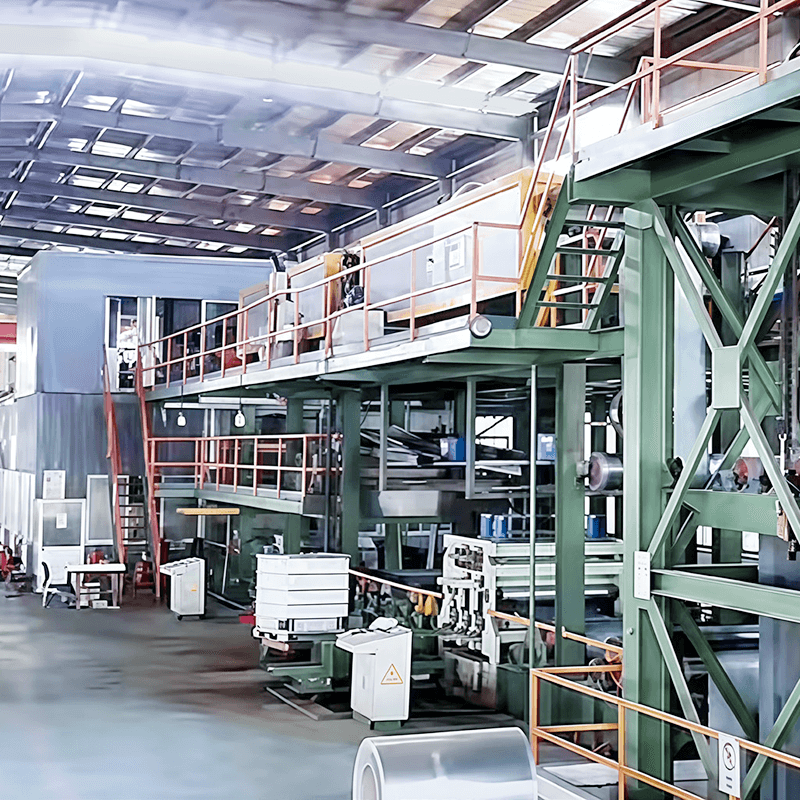
Deciding to automate requires honest internal audits. Facilities must pinpoint exact production weaknesses. Throwing robots at an undefined problem wastes capital and creates new bottlenecks. You must evaluate your constraints logically.
Managers must identify the current production constraint before soliciting vendor bids. Identify which specific factor limits your daily output.
Speed (Throughput): Does the manual spray team fail to keep up with assembly lines?
Material Waste (Efficiency): Are you spending excessive budget on wasted paint due to poor transfer efficiency?
Quality (Rework): Do operators struggle to maintain consistent mil thickness, leading to high rework rates?
Automation targets these exact failures. Robots do not tire, and they apply exact volumes of fluid every cycle.
Automation yields the fastest payback in high-volume environments. Running identical parts thousands of times maximizes robotic efficiency. However, many modern facilities operate in high-mix, low-volume environments. These highly customized runs pose distinct challenges. Facilities managing low-batch runs must evaluate offline programming software. Offline programming allows engineers to write new robot paths virtually. This keeps the physical line running, drastically minimizing changeover downtime.
Skilled manual sprayers are increasingly difficult to hire and retain. Operator turnover creates massive hidden costs. New hires require extensive training to achieve acceptable finish quality. Furthermore, manual spraying exposes humans to hazardous Volatile Organic Compounds (VOCs). Rising health and safety compliance requirements force companies to rethink manual operations. Automating removes humans from dangerous environments. It simultaneously reduces personal protective equipment costs and liability risks.
All automated lines share basic principles, but scale and precision vary wildly. General industrial lines differ vastly from an Automotive Painting Line. You must match equipment specifications to your exact industry requirements.
Industrial lines prioritize robust corrosion protection. They deliver standardized aesthetics for heavy machinery, structural steel, or durable consumer goods. Finish quality matters, but extreme gloss is rarely the primary goal. These systems focus heavily on durability and high throughput. They typically utilize simple color change manifolds. Industrial environments often accept minor surface inclusions provided the coating meets thickness specifications.
Automotive applications exist in a completely different tier. These lines demand strict environmental controls to achieve flawless Class-A finishes. Every vehicle exterior must reflect light perfectly without orange peel or dust inclusions.
An automotive setup requires highly advanced robotic trajectories. Robots use electrostatic bell atomizers spinning at thousands of RPMs. The spray booths utilize cleanroom-grade HEPA filtration. Rapid purge valve systems are mandatory. These valves flush lines and switch colors in seconds to minimize paint waste between different vehicle chassis on the same conveyor.
Purchasing a rigid system stifles future growth. Assess whether a vendor's architecture allows for modular expansion. Can you easily add a second basecoat robot later? Can the curing oven be extended if line speeds increase? Modular designs prevent you from requiring a complete line redesign in five years. Build flexibility into the initial floor plan.
Specification Feature | General Industrial Focus | Automotive Focus |
|---|---|---|
Finish Requirement | Corrosion resistance, uniform color | Flawless Class-A, high gloss, zero defects |
Filtration Standard | Standard cross-draft or down-draft | Cleanroom-grade HEPA, strict climate control |
Atomizer Choice | Air-assisted, conventional spray guns | High-speed electrostatic rotary bells |
Color Change Speed | Moderate (batch runs expected) | Rapid purge blocks (chassis-to-chassis changes) |
Investing in a complete Coating Line demands rigorous financial scrutiny. Decision-makers must look beyond upfront price tags. Instead, evaluate the specific performance metrics driving long-term profitability. True returns manifest through compounding daily savings.
Transfer efficiency measures how much paint actually lands on the part versus flying into the exhaust filters. Baseline manual spraying often yields a dismal 30-40% efficiency. Automated electrostatic applications routinely achieve 85-90% efficiency. This massive jump slashes fluid consumption. Model the exact cost savings in raw material over 12 to 36 months. Less overspray also means fewer filter replacements and lower disposal costs.
First-Pass Yield tracks the percentage of parts finishing the line without defects. Manual lines suffer from inconsistent mil thickness, runs, and sags. Defective parts require costly buffing, sanding, and repainting. Automation delivers exact film builds every single cycle. Implementing robotics should directly correlate with a double-digit reduction in defect rates. Higher FPY immediately boosts overall factory capacity.
Running ovens and massive exhaust fans consumes immense electricity. Evaluate the efficiency of modern curing ovens closely. Look for booths utilizing variable frequency drives (VFDs) on exhaust motors. Modern systems adapt energy usage automatically based on line speed and part density. If the conveyor sits empty for ten minutes, the system should reduce airflow to save power.
Never accept a vendor's "best-case scenario" calculations at face value. Perfect conditions rarely exist in live production. Require vendors to model payback periods using average operational efficiency (OEE). Ensure their models account for routine maintenance stops. They must also factor in realistic color changeover times and minor fault recoveries. Skeptical evaluation prevents painful financial surprises post-installation.
Common Mistake: Failing to include the cost of compressed air generation in utility estimates. Robotic atomizers require massive volumes of clean, dry air to function properly.
Even the most advanced hardware fails if implementation lacks discipline. Deploying an automated layout disrupts current operations. Anticipating these rollout risks separates successful integrators from struggling facilities.
Automated systems consume significant floor space. You must assess structural realities before signing contracts. Evaluate ceiling heights for overhead conveyor loops. Check load-bearing floor specifications to ensure they can support heavy robotic arms. You must also allocate substantial square footage for mandatory safety fencing and interlocked access gates. Never compress the layout too tightly. Technicians need physical room to perform routine maintenance safely.
Beautiful mechanical hardware remains useless without seamless PLC integration. Modern factories rely on data. You must evaluate the risk of communication failures between existing platforms. Your legacy Enterprise Resource Planning (ERP) systems need to speak to the new SCADA software. If the production schedule drops a work order, the paint line needs to recognize the required recipe instantly. Poor software handshakes cause endless phantom stoppages.
Transitioning to full automation requires a phased installation approach. You cannot rip out the old line and install the new one over a weekend. Map out the expected operational disruption carefully. Manufacturers must build substantial inventory buffers before tearing down manual booths. Discuss commissioning phases with your integrator. Physical builds take weeks, but software debugging and robot path teaching often take much longer.
Phase 1: Site preparation and utility drops (electrical, air, water).
Phase 2: Mechanical installation of booths, ovens, and conveyors.
Phase 3: Robot mounting and fluid delivery plumbing.
Phase 4: I/O testing, PLC programming, and dry-run cycling.
Phase 5: Wet testing, path teaching, and final sign-off.
Automation will reduce your reliance on manual sprayers. However, it shifts your labor requirements upward. The new line requires higher-tier technicians. Your staff needs capability in robot programming and path refinement. They must understand complex fluid mechanics for troubleshooting dosing pumps. Preventative maintenance shifts from simple cleaning to advanced servo diagnostics. You must invest heavily in upskilling your best floor workers to manage this new technology.
Deciding to automate requires a brutal assessment of your current production baseline. Decision-makers must audit their exact waste metrics, rework percentages, and throughput bottlenecks before soliciting vendor bids. Knowing your numbers protects you from purchasing unnecessary features. It also provides a clear baseline to measure future success.
Evaluating an automated line means looking far past the shiny robotics. You must verify the reliability of the entire turnkey ecosystem. Pre-treatment chemical baths, booth airflow, and curing oven profiles matter just as much as robotic precision. If one subsystem underperforms, the entire investment suffers.
Your next step requires action. Initiate a comprehensive facility audit today. Document your floor space, utility capacity, and exact production goals. Then, engage shortlisted integrators and demand a verifiable proof-of-concept. Request a part-trial using your exact substrates and fluids to prove their technology works in the real world.
A: Realistic timelines vary by system complexity. Typically, engineering and fabrication require 3 to 6 months. Following fabrication, on-site installation and commissioning add another 4 to 8 weeks. Phased rollouts and complex robotic path teaching can extend this timeline. Always buffer your inventory to survive this transitional downtime.
A: Yes, but retrofitting often proves more complex than building new. Manual booths frequently lack the necessary dimensions and structural floor support for heavy robots. Furthermore, automated airflow requirements and strict safety compliance, including ATEX zoning regulations, usually mandate extensive modifications. It is often cheaper to replace the booth.
A: Maintenance requires strict daily, weekly, and monthly routines. Daily tasks include cleaning atomizer tips and checking chemical baths. Weekly routines involve deep flushing of fluid lines and inspecting booth filters. Monthly schedules focus on preventative software diagnostics, robotic joint lubrication, and calibrating fluid dosing pumps to ensure continued precision.


