

close
Choose Your Site
Global
Social Media
Views: 0 Author: Site Editor Publish Time: 2026-06-09 Origin: Site


Buyers searching for the difference between "electrophoretic coating" and "ED coating" often find themselves caught in industry terminology overlap. They are not looking at a clash of competing technologies. Instead, they are looking at two names for the identical process. Both terms describe a foundational surface finishing method. You use electrical current to deposit suspended paint particles onto a conductive substrate.
We must shift our focus from semantics to strategy. Engineering and procurement teams face real decisions when specifying surface finishes. You must choose between Cathodic and Anodic systems to meet durability goals. You need to optimize line variables for complex geometries. You must also evaluate hybrid coating ecosystems for outdoor applications.
This guide breaks down exactly how to specify and verify the right finish for your products. You will learn the mechanical differences between electrodeposition sub-types. We will also explore strict quality assurance metrics to audit suppliers. Finally, you will discover how to layer coatings for maximum environmental protection.
Electrophoretic coating and ED coating are synonymous terms for electrodeposition; the critical technical distinction lies between Anodic (AED) and Cathodic (CED) sub-types.
Cathodic (CED) is the industry standard for high-corrosion environments (making up ~70% of global use), while Anodic serves niche, cost-sensitive applications.
Epoxy-based electrophoretic coatings excel at corrosion protection but fail under UV exposure, making them ideal primers rather than standalone exterior finishes.
Evaluating an electrophoretic coating line requires strict QC metrics, including "throwpower" assessment and standardized salt-spray testing.
Combining processes yields the highest durability; layering powder coating over an electrophoretic base solves the UV-degradation problem while maximizing complex-part coverage.
Procurement managers and engineers often waste valuable time evaluating "ED" against "Electrophoretic" options. You might solicit vendor quotes and receive confusing proposals. One supplier pitches an ED coating. Another supplier insists their electrophoretic coating provides better results. This semantic confusion causes project delays and creates artificial bidding wars.
We must clarify these concepts immediately. "ED" strictly stands for Electrodeposition. "Electrophoretic coating," "E-coating," and "Electropainting" are all interchangeable terms. They describe this exact same water-based, electrically driven process. During this process, you submerge a metal part into a paint bath. You apply an electric current. The paint particles migrate toward the part and adhere to its surface. Once you achieve the desired film thickness, you cure the part in an oven.
You should redirect your evaluation matrix entirely. To specify the correct finish, the decision must pivot to the polarity of the process. You need to evaluate Cathodic versus Anodic methods. You must also select the correct base resin chemistry. Epoxy resins offer distinct advantages over acrylic resins. Understanding these chemical and electrical differences matters far more than debating acronyms.
Do not let suppliers use terminology to inflate perceived value. Focus on the actual chemistry. Ask vendors what specific resin they use. Ask them about their curing temperatures. Demand to know their bath monitoring protocols. These factors dictate the final quality of your coated parts.
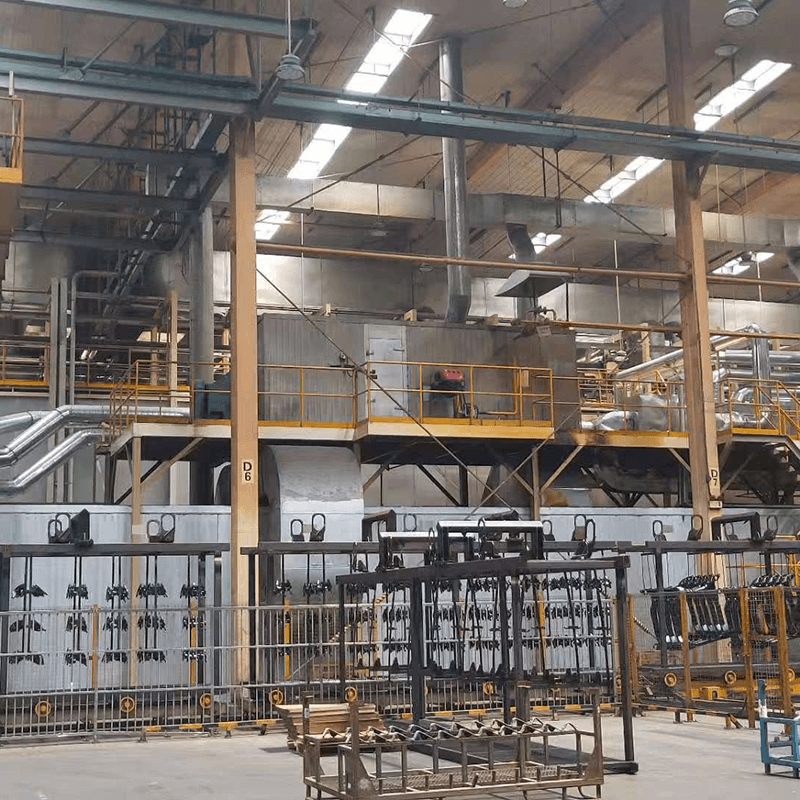
Once you move past the terminology, you face the real engineering choice. You must break down the two primary subsets of electrodeposition. The industry divides these solutions into Cathodic Electrocoating (CED) and Anodic Electrocoating (AED). Each subset serves entirely different operational environments.
In a CED system, the workpiece acts as the cathode. You apply a negative electrical charge to your metal part. The paint particles in the bath carry a positive charge. They migrate toward the workpiece and bond to it.
CED provides superior corrosion resistance. This electrical setup prevents metal ions from dissolving into the paint film. Consequently, you get a much purer, stronger barrier. The automotive industry relies heavily on CED. It makes up roughly 70% of global electrodeposition applications today.
However, CED has specific chemistry limits. Manufacturers rely heavily on epoxy resins or acrylics for this process. Epoxy resins deliver incredible durability and chemical resistance. Unfortunately, they suffer from low UV stability. Direct sunlight will degrade an epoxy CED finish quickly. Alternatively, you can use acrylic resins. Acrylics remain UV stable over time. The trade-off is lower overall corrosion resistance compared to epoxy.
In an AED system, the mechanics reverse. The workpiece acts as the anode. You apply a positive charge to the metal part. The negatively charged paint particles migrate toward the substrate.
AED systems generally require lower initial investment. They feature simpler control mechanisms. Smaller shops often prefer AED for indoor applications. It coats simple parts effectively and keeps processing prices down.
The primary risk involves substrate oxidation. The anodic electrical process can cause tiny amounts of metal to dissolve from the workpiece. These metal ions enter the wet paint film. This contamination inherently weakens the protective barrier. Therefore, AED delivers inferior longevity compared to CED. You should avoid AED for marine, automotive, or harsh industrial environments.
Feature | Cathodic (CED) | Anodic (AED) |
|---|---|---|
Workpiece Polarity | Cathode (Negative) | Anode (Positive) |
Corrosion Resistance | Excellent | Moderate to Low |
Substrate Oxidation | No | Yes (Risk of metal ions in film) |
Primary Resins | Epoxy, Acrylic | Acrylic, Polyester |
Best Application | Automotive, Harsh Environments | Indoor Parts, Cost-Sensitive Items |

You must move beyond vendor promises. You need verifiable industrial standards to evaluate surface finishes. A proper quality assurance program ensures long-term part survival. You should mandate specific evaluation dimensions in your purchase orders.
Engineers love electrodeposition because it respects tight tolerances. Establish clear baseline measurements with your supplier. Standard black e-coat films should measure between 18 to 30 microns. This highly predictable thickness prevents dimension buildup on precision parts.
Compare this to Black Zinc Plating. Plating often builds up unevenly on sharp edges. It can ruin the thread pitch on small fasteners. Electrodeposition forms an even, conformal film over every surface. You do not have to chase threads or mask critical mating surfaces nearly as often.
"Throwpower" is the critical metric for evaluating complex geometries. It measures how well the coating penetrates deep cavities and internal threads. High throwpower means the electrical field pushes paint deep inside tubes and hidden recesses.
If a supplier runs a poor bath, their throwpower drops. The outside of the part looks perfect. The inside remains bare metal. Moisture enters the unpainted cavity, and the part rusts from the inside out. You must require sectioning tests to verify internal coverage.
You cannot guess a coating's lifespan. You must rely on standardized durability testing frameworks. Implement the following verification steps:
Salt Spray Testing (ASTM B117): This test evaluates lifespan in harsh environments. Technicians score the part and expose it to a corrosive fog. You measure how many hours pass before rust creeps from the score line. Quality CED epoxy systems routinely exceed 1,000 hours of salt spray resistance.
Taber Abrasion Testing: This validates physical wear resistance. A weighted abrasive wheel spins against the coated sample. You measure the weight loss of the coating. This proves surface hardness against mechanical friction.
DIN Abrasion Tests: Similar to Taber, this checks wear characteristics using specific rubber-wheel friction methods. It helps predict how the finish handles sliding contact in real-world assemblies.
We must confront certain implementation realities. No single coating solves all environmental threats perfectly. Electrodeposition provides unmatched total-part coverage. It delivers incredible corrosion defense. However, it typically lacks UV resistance and aesthetic variety. You are usually limited to black or dark utility colors.
You can achieve the highest performance by layering finishes. This compound strategy turns individual weaknesses into a unified strength.
Using electrodeposition as the base primer and powder coating as the topcoat yields massive compound benefits. This combination is the gold standard for outdoor equipment.
Internal Sealing: The liquid bath seals hidden recesses where powder spray guns cannot reach.
Adhesion Base: The e-coat provides a highly textured, tightly bonded foundation. Powder sticks to it flawlessly.
UV Shielding: The powder topcoat protects the epoxy base from sun degradation.
Aesthetic Variety: Powder allows you to apply high-gloss colors, metallic flakes, and custom textures.
You must also understand how electrodeposition stacks up against alternative finishing ecosystems. Not all liquid dips operate the same way.
Contrast with A-Coating: A-Coating stands for Autodeposition. It relies entirely on a chemical reaction, not electricity. An acidic bath reacts with iron to form the coating. A-Coating requires less energy, but it only works on ferrous metals. Electrodeposition uses electrical current and works on any conductive substrate, including aluminum and brass.
Contrast with Electroplating: Processes like Anodizing or Black Zinc plating deposit metallic ions onto the surface. Electroplating requires significantly more energy. It also struggles to achieve uniform thickness on complex geometric parts. Plating tends to build up on outer edges (the Faraday cage effect) while leaving inner corners thin. Electrodeposition eliminates this uneven buildup.
Bringing this capability in-house requires serious planning. You must evaluate specific scalability and infrastructure needs before building an electrophoretic coating line. Even if you outsource, auditing a tier-1 supplier requires knowing exactly how these systems function.
Electrodeposition fails without rigorous surface preparation. You cannot dip a dirty part into the bath. A proper line requires multi-stage cleaning. You need heavy-duty alkaline degreasing to remove stamping oils. Following the rinse, you must apply a conversion coating. Zinc phosphating is the standard prerequisite. This phosphate layer etches the metal and creates microscopic peaks. The paint film locks onto these peaks for maximum adhesion.
Operating the line requires strict monitoring of physics and chemistry. A slight drift in variables ruins entire production batches.
Voltage & Rupture Voltage: You must balance voltage to maximize throwpower. Higher voltage pushes paint deeper into cavities. However, exceeding the "rupture voltage" causes the film to boil. This creates porous, overly thick films that peel off easily.
Bath Temperature: The paint bath needs constant chilling. The electrical process generates heat. If the temperature rises, bath viscosity drops and electrical conductivity spikes. You lose control over film thickness entirely.
Modern manufacturing demands strict environmental, social, and governance (ESG) compliance. Old painting methods waste material and release heavy solvents. A modern closed-loop system fixes this.
Highlight the necessity of ultrafiltration (UF) systems. When parts leave the paint bath, they carry un-deposited paint droplets. The line sprays them with permeate water in post-rinsing zones. The UF system captures this rinse water. It separates the paint solids and returns them to the main tank. This recovers up to 98% of the paint particles. It minimizes VOC emissions, reduces hazardous waste, and improves the line's overall closed-loop efficiency.
Control Variable | Monitoring Action | Impact on Final Quality |
|---|---|---|
Pretreatment pH | Titration checks every shift | Dictates phosphate layer formation and paint adhesion. |
Applied Voltage | Automated rectifier controls | Determines final film thickness and internal throwpower. |
Bath Temperature | Heat exchangers / Chillers | Maintains correct paint viscosity and prevents film rupture. |
Ultrafiltration Rate | Flow meter tracking | Recovers lost paint, reducing waste and surface defects. |
The choice is not between electrophoretic and ED coating. These are just two names for the same powerful process. Your true task involves selecting the right chemistry. You must mandate Cathodic (CED) systems for serious protection. You need to specify the correct film thickness for your tolerances. Most importantly, you must know when to layer a top-coat for UV defense.
Keep a clear shortlisting logic for future projects. For tight-tolerance, highly complex parts needing total corrosion protection, specify CED epoxy. If you face high-friction environments or need a decorative metallic finish, pivot to electroplating. For heavy outdoor exposure, mandate a powder-over-e-coat system to get the best of both worlds.
Stop guessing about surface durability. Encourage your engineering teams to consult with surface engineering experts. Audit your current finishing specifications today. If your volume justifies it, properly scope the setup of a new in-house line to take total control over your product quality.
A: Yes. E-coating serves as an excellent, highly adhesive primer for powder coating. The e-coat provides total corrosion protection for hidden internal cavities. The powder topcoat binds tightly to the e-coat surface. This creates a highly durable, UV-resistant finish perfect for outdoor environments.
A: While highly corrosion-resistant, no coating is permanently rust-proof. CED systems over zinc phosphate provide massive rust delays, often exceeding 1,000 hours in salt spray testing. However, its ultimate lifespan depends entirely on film thickness, resin type, and environmental exposure.
A: Standard applications typically range from 18 to 30 microns. This extremely thin, uniform layer makes it ideal for parts requiring tight dimensional tolerances. It coats complex geometries evenly without building up heavy edges or ruining threaded holes.
A: Standard epoxy-based e-coats are not UV stable. They will chalk, fade, or degrade under direct sunlight. Acrylic-based e-coats offer much better UV stability. However, choosing acrylics usually means you sacrifice some of the extreme corrosion resistance found in epoxy formulas.


