

close
Choose Your Site
Global
Social Media
Views: 0 Author: Site Editor Publish Time: 2026-07-19 Origin: Site


Upgrading or installing a new Electrophoretic Coating Line represents a significant capital investment. It often acts as a critical bottleneck in your entire manufacturing process. A mismatched system causes cascading failures. You will face excessive chemical waste, high energy overhead, and inconsistent film builds. These issues quickly destroy your return on investment.
This guide provides an evidence-based framework for evaluating equipment. We help you compare technical specifications effectively. You will learn how to mitigate implementation risks before committing to a vendor. By focusing on core metrics, you can ensure your chosen equipment meets strict quality standards. We will break down production constraints, core technologies, and automation logic. You will understand exactly how to align hardware capabilities with your specific operational goals.
Tank and layout sizing must align with peak production volumes and maximum part dimensions, not just average throughput.
System efficiency hinges on the quality of ultrafiltration (UF) and reverse osmosis (RO) units to maximize paint recovery and minimize wastewater.
Automation integration is critical; an automotive electrophoresis line requires different material handling and PLC logic than a general industrial batch line.
Vendor validation should rely on Factory Acceptance Testing (FAT) protocols, long-term operational cost modeling (OpEx), and post-installation support SLAs.
You cannot design an efficient system based on guesswork. Buyers must define hard production constraints early in the planning phase. This ensures the physical footprint supports your actual manufacturing output.
Calculating precise line speeds requires looking beyond annual production targets. You must determine the takt time. Takt time dictates the maximum allowable time to produce one unit. Based on this metric, you can calculate the necessary rack densities. If you process 500 parts per hour, your line speed and immersion times must synchronize perfectly. A slow line creates production backlogs. A fast line risks incomplete coating and poor adhesion.
Complex substrates directly impact your equipment sizing. You must evaluate part geometry carefully. Deep recesses and internal cavities require strategic anode placement. They also demand properly sized rectifiers to guarantee uniform film thickness. Poor planning leads to bridging, where paint pools in corners. It can also cause bare spots inside hollow sections. Furthermore, part weight dictates structural support. Heavy agricultural components require reinforced hoists and thicker tank walls compared to small brackets.
Space acts as a rigid constraint. You must assess vertical versus horizontal layouts based on your building dimensions. Consider these critical layout factors:
Overhead clearances: Ensure enough vertical space for lifting hoists and drop sections.
Floor load capacities: Wet process tanks hold thousands of gallons. Your concrete foundation must support this massive static load.
Auxiliary footprints: Chillers, curing ovens, and waste treatment units require substantial dedicated floor space.
Maintenance access: Leave clear walkways around tanks for pump inspections and filter changes.
Production volumes rarely stay flat. You should build modular capacity into your initial design. Expandable curing ovens save money later. Oversized tanks allow you to increase rack sizes down the road. This modular approach accommodates future production increases without demanding a complete system rebuild.
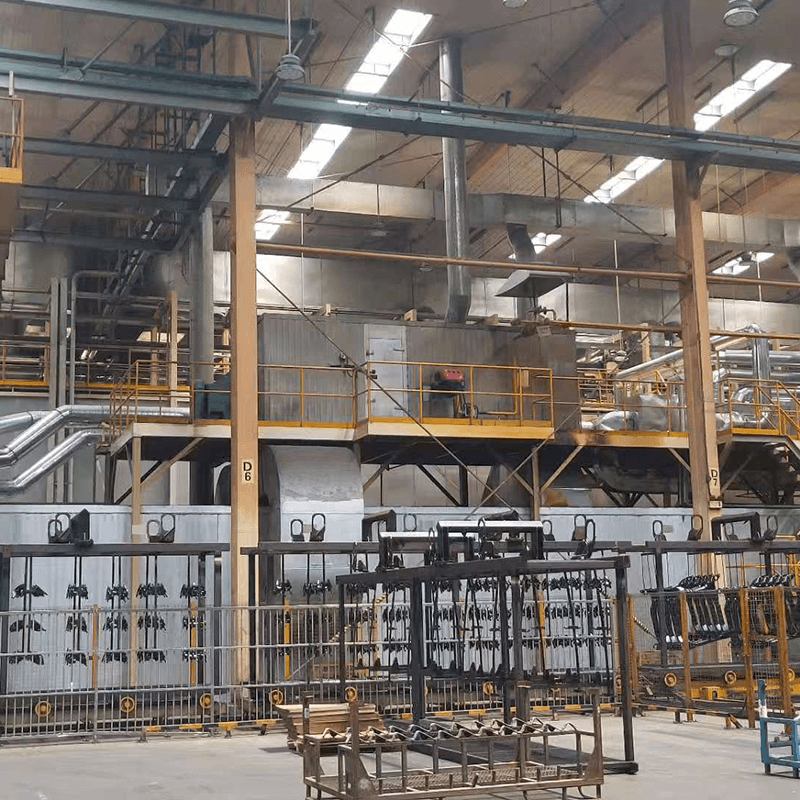
The internal hardware dictates your finish quality. You must scrutinize the electrical and fluid dynamics systems. Substandard components lead to frequent rework and high chemical consumption.
Rectifiers serve as the heartbeat of the process. They supply the direct current required for paint deposition. You must demand low-ripple, highly controllable rectifiers. A ripple factor below 5% is non-negotiable. High ripple causes inconsistent voltage application. This inconsistency leads to severe surface defects, such as pinholing or "orange peel" textures. Modern rectifiers should step up voltage gradually. This controlled entry prevents power surges when large parts enter the bath.
Efficient systems rely heavily on Ultrafiltration. UF membranes separate the paint solids from water and solvents. You must assess the permeability and lifespan of these membranes. High-performing UF systems recover over 98% of un-deposited paint. They return this valuable material back to the main bath. This closed-loop recovery directly lowers your chemical expenditures. It also drastically reduces the volume of hazardous sludge requiring disposal.
Buyers must choose between tubular and flat anode systems. Each design offers distinct characteristics for different part geometries.
Feature | Tubular Anodes | Flat Anodes |
|---|---|---|
Circulation | Excellent internal fluid dynamics | Prone to dead spots |
Maintenance | Easy to remove and replace individually | Requires lifting heavy plates |
Electrical Field | Consistent 360-degree coverage | Directional, often uneven on complex parts |
Best Application | Complex geometries, automotive chassis | Simple, flat panels |
Tubular anodes offer superior performance for complex geometries. They provide better circulation and more consistent electrical fields. They also make routine maintenance much safer and faster.
Paint solids will settle if the fluid remains still. Proper agitation prevents bath contamination and surface defects. You must review pump sizing carefully. Ensure the vendor places eductor nozzles strategically along the tank bottom. These nozzles create a rolling wave effect. The fluid must cycle through high-capacity bag filters continuously. This filtration removes dirt, metal shavings, and cured paint flakes before they stick to your products.
Manual operations introduce human error. Modern manufacturers rely on automation to ensure repeatability. You must select material handling and software logic tailored to your specific industry.
You must decide between programmable hoist systems and continuous overhead conveyors. Programmable hoists work perfectly for variable batch times. They handle heavy, oversized parts effectively. You can change immersion times for different product families easily. Conversely, continuous overhead conveyors serve high-volume production best. If you produce thousands of identical parts daily, a continuous line maintains a steady, unbroken rhythm.
Automotive manufacturers face the strictest quality requirements globally. An Automotive Electrophoresis Line requires advanced SCADA (Supervisory Control and Data Acquisition) integration. You need robotic transfer capabilities for precise part positioning. Stringent data logging is mandatory. The system must record voltage, temperature, and time for every single vehicle body. This traceability ensures compliance with international automotive standards. If a defect occurs months later, you can trace the exact processing conditions of that specific batch.
The software interface dictates how easily operators run the equipment. Evaluate the Programmable Logic Controller (PLC) and Human-Machine Interface (HMI) thoroughly. The system must offer real-time monitoring. Operators need instant visibility into bath temperature, pH levels, conductivity, and voltage.
Best Practice: Ensure the software includes automated alarms. If the bath pH drifts out of specification, the system should trigger a warning before parts enter the tank.
Common Mistake: Relying on proprietary, closed-source software. Always demand open-architecture PLC codes. This allows your internal engineers to troubleshoot minor issues without paying expensive vendor service fees.
Heavy machinery consumes massive amounts of power and water. Buyers must evaluate the environmental footprint of the equipment. Efficient systems protect your operating margins and ensure regulatory compliance.
Curing ovens consume the most energy in the entire facility. You must scrutinize their thermal efficiency. Look for thick, high-density insulation panels to prevent heat loss. Insist on heat recovery systems. These systems capture exhaust heat and redirect it to pre-heat incoming air. Additionally, evaluate the electrical load of your chillers and rectifiers. Upgrading to variable frequency drives (VFDs) on large pumps reduces electrical consumption significantly during non-peak hours.
Water scarcity and disposal costs drive modern engineering decisions. You must analyze the efficiency of the post-rinse stages. Parts carry drag-out chemicals from the main bath. Effective lines utilize counter-flowing cascade rinses. Fresh water enters the final stage and flows backward toward the main tank. Furthermore, the integration of Reverse Osmosis (RO) systems minimizes fresh water consumption. RO units filter town water, removing impurities. This pure water prevents spotting on the final finish.
Environmental regulations dictate strict limits on heavy metal discharge. Ensure the new equipment is compatible with your existing plant effluent systems. If your current plant cannot handle the new volume, evaluate expansion costs early. You may need to add dedicated precipitation and filtration units. These units neutralize acids, precipitate metals, and compress sludge. Proper integration guarantees you meet local environmental regulations without facing costly fines.
Purchasing the equipment represents only the first step. Installation and commissioning carry massive risks. You must evaluate the vendor's ability to execute the project on time.
Facility downtime costs money. You must establish clear, binding milestones with your vendor. Break the project into phases: site preparation, mechanical installation, electrical integration, and wet testing. Assign specific deadlines to each phase. Hold the vendor accountable for delays. Ensure your facility is ready for delivery. Reinforced floors and utility drops must be completed before the trucks arrive.
Never accept equipment without rigorous testing. Demand transparent Factory Acceptance Testing (FAT) before the vendor ships anything. During FAT, run your actual parts through the dry mechanisms. Verify hoist speeds and automation logic. Once installed, conduct Site Acceptance Testing (SAT). Wet the tanks, charge the chemicals, and run production parts. Verify production speeds and coating quality against your original contract specifications. Do not sign the final payment release until the SAT passes completely.
Initial startup poses severe risks to bath stability. Contamination happens easily when introducing new metal tanks and piping to sensitive chemicals. Address this risk early. Ask the vendor what chemical management support they provide. Reliable vendors keep a chemical engineer on-site for the first 30 to 90 days. They monitor bath turnover rates, adjust solvent levels, and train your staff on daily titration testing.
Move beyond standard mechanical warranties. You need a comprehensive Service Level Agreement (SLA). Assess their parts availability. Where do they stock spare pumps and rectifiers? Evaluate their remote troubleshooting capabilities. Can their engineers log into your PLC securely to diagnose faults? Finally, demand guaranteed response times. If the Coating Line stops entirely, you need an expert on-site within 24 hours.
Choosing the right electrophoretic system requires balancing upfront capital with long-term operational efficiency. You must prioritize automation needs and strict environmental compliance. Every component, from the rectifier to the curing oven, impacts your final finish quality.
Buyers should map their precise technical requirements before speaking to sales teams. Demand transparent energy and resource consumption models from all shortlisted vendors. Prioritize suppliers who demonstrate proven integration frameworks and robust testing protocols.
Consult with your internal engineering teams immediately. Conduct a thorough site audit to measure floor loads and overhead clearances. Finalize your technical specification sheet (RFQ) to ensure vendors quote exactly what your facility requires.
A: Focus on efficiency metrics compared to your legacy systems. Calculate the reduced chemical waste achieved through modern UF recovery systems. Factor in the lowered labor costs from automated material handling. Measure the decreased reject and rework rates due to precise voltage control. Finally, add the monthly energy savings gained from heat recovery ovens and VFD pumps.
A: Depending on complexity and scale, the timeline from design approval to commissioning typically ranges from 4 to 8 months. Facility readiness often acts as the primary bottleneck. Ensure your concrete, drainage, and electrical drops are completed while the equipment is being fabricated.
A: Yes, but it requires significant modifications. You must redesign the floor plan to accommodate the large wet processing tanks. The flooring must be structurally reinforced to support massive liquid weight loads. You will also need to install dedicated wastewater treatment systems for chemical runoff.
A: RO water is essential for the final post-rinse stages. Standard tap water contains minerals that cause spotting and chemical bleed-out during the baking process. RO systems provide pure water, ensuring a pristine surface finish while maintaining closed-loop environmental compliance.


